






The Red Planet
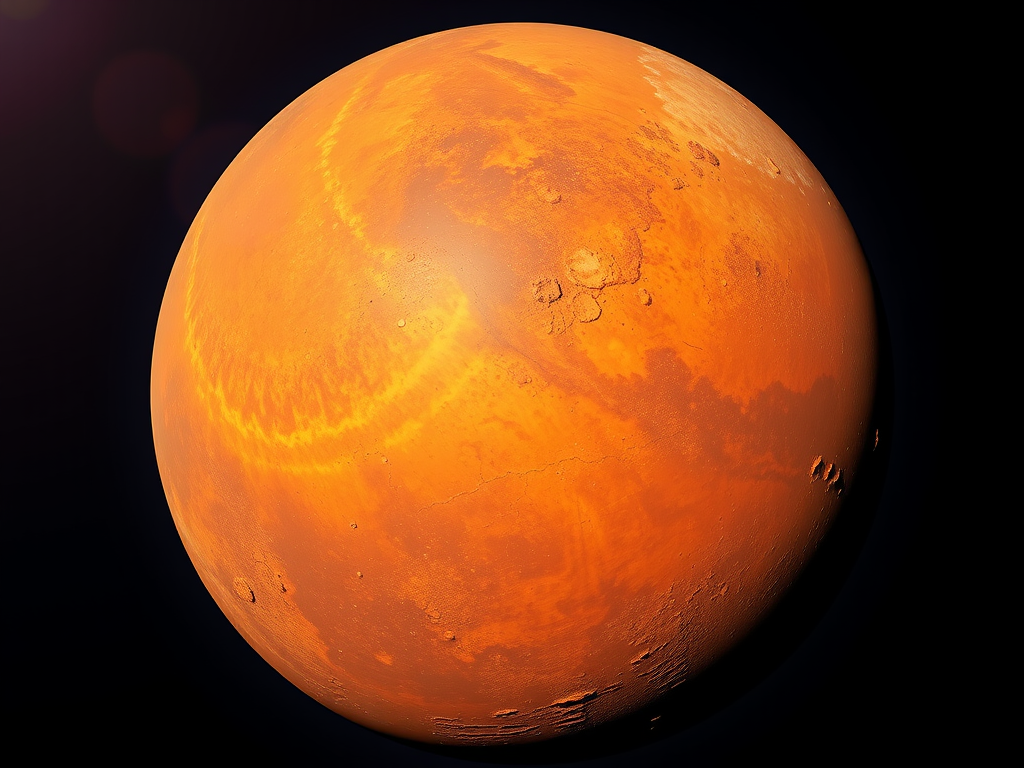
Mars, often referred to as the “Red Planet” is a rough, stony planet, located 4th in our Solar system and is Earths’s closest neighbour. It is a popular target for space exploration due to it’s potential for past or present life so exploring the red giant is a crucial step towards understanding our own evolution. Understanding the planet’s past could reveal if life ever existed beyond Earth and if so, how it evolved. Studying the Martian history could also help us to learn about the formation and evolution of the solar system and our planet.
The Societal Impact: Why Mars Matters
The exploration of Mars is not just a scientific endeavour, it also holds significant societal value. By understanding Mars’s geological history and potential for past or present life, we gain a deeper perspective on our place in the universe, and Earth’s formation. The neighbour planet’s exploration also fosters technological advancements that benefit humanity in various ways and pushing the boundaries of technology, leading to innovations, and inspiring future generations of scientists and engineers.
Unearthing the Secrets: Curiosity’s Role in the Investigation
The Curiosity Rover, a marvel of robotic engineering, is a car sized robotic explorer, sent to Mars by the NASA in 2012. The robot is operating with a combination of sophisticated onboard AI and remote controle. From Earth, Mission control sends commands to the Rover, instructing it on where to drive, what to analyze, and how to operate it’s instruments. Curiosity is also equipped with advanced AI capabilities that allow it to make it’s own decisions while on a mission or standing by. It can identify, and select interesting rocks to analyze using it’s laser and sensors, and navigate around obstacles without constant input.
The Rover has been exploring Mars since 2012, and it has become instrumental in analyzing the Martian surface composition. The recent discovery of yellow crystals is a testament to the rover’s ability to make unexpected finds and advance our understanding of the Red Planet.
A Spark of Surprise on the Red Planet
In February 2023, NASA’s Curiosity rover made an unexpected discovery while carrying our a routine drilling operation in the above displayed Gale Crater. The operation yielded further than just a powdered rock, it revealed a sight that captivated the attention of scientists; A cluster of bright yellow crystals. While this discovery might seem insignificant for some, it has become a notable talking point in the scientific community, because of it’s potential to hold clues of Mars’s history and past environmental conditions.
A First Look: Elemental Sulfur Makes its Martian Debut
The rover is equipped with a multitude of sensors as well as other scientific instruments, which allows it to make the necessary measurements to analyze geological foundings. The analysis, run by one of these instruments confirmed the deposit to be composed of elemental sulfur. This is the first time that this element has been found in it’s native form on the Red Planet. Sulfur is the tenth most abundant element in the universe, and is commonly found on Earth in various forms, including volcanic deposits and hot springs. It’s presence on Mars, especially in it’s elemental state has opened up a new chapter in our understanding of the Martial Landscape
Implications for Mars’ Past: A Volcanic or Hydrothermal Playground?
The presence of elemental sulfur points towards two certain, and maybe various uncertain future scenarios for the Gale Crater’s history. One theory suggest that it could be result of past vulcanic activity. When volcanoes erupt, sulfur-rich gases are released, which can condense and solidify, creating the yellow deposit we know as elemental sulfur when cooling.
The alternative, more evident theory suggest that the crystals could be a product of hydrothermal vents, similar to those found in Earth’s ocean floors. These underwater vents spew minerals rich hot water, and as the water cools and interacts with the surrounding rock, forms mineral deposits. While we can not be fully convinced yet, there are plenty of evidence suggesting that the Gale Crater once held water. Curiosity has previously discovered sites with features that could be identified as dried-up lake beds and river channels, even signs of changing water levels over time. Clay minerals and sedimentary rocks were also identified both of which deposits require the presence of water for it’s formation.
The Yellow Crystals: A Stepping Stone to Further Discovery
This discovery on is a captivating reminder of the potential for scientific breakthroughs on the Red Planet. It highlights the importance of continued exploration and underscores the value of curiousity in scientific discovery. As we uncover more of these deposits, the yellow crystals will likely remain a significant piece of the Martian history, and could allow scientist to unravel more of the secrets of the Mars.
To understand more about the origins of the crystals and Mars’s potential for past or present life, first we have to locate additional clues, such as these sulfur deposits on the planet, hoping for more evident signs of past volcanic activity or hydrothermal vents. Determining the age of these crystals could also serve us with insights of the geological process and timeline that shaped the Gale Crater.
Beyond Curiosity: The Future of Martian Exploration
The discovery of the yellow crystals is a significant development , but only a small piece in solving the Martian puzzle. NASA’s current primary goal is to understand our Neighbour Planet scientifically. The proposed plans are send advances rovers and Landers to study the Martian surface, however long term goals reveals that the organisation is aiming to eventually send Humans to the Mars focusing on certain return.
Musk, well known billionaire has however criticised NASA for it’s slow progress, and often expressed frustration with what he perceives as bureaucratic hurdles within NASA preventing progress towards human missions to Mars. The billionaire believes that a more innovative and agile approach is needed to achieve Mars Colonization and emphasizes the need for private companies such as SpaceX to accelerate space exploration. Musk has also spoken about the importance of competition and private investment in the industry.
SpaceX
The exploration of Martial History has caught the attention of Elon Musk and through SpaceX, his private company that leverages government contracts he decided to join NASA in search of clues of the Red Planed’s future, present, and potential for life.
CEO Elon believes that is is crucial to establishing a multi-planetary species for the long term survival, evolution of humanity and to mitigate the risks from Earth-bound threats such as pandemics or space impacts.
SpaceX’s plan includes developing the Starship, their re-usable rocket system, designed for interplanetary travel. And eventually transporting people, and cargos to Mars with the goal to build a Self-Sustaining Colony. Current plans of the private organisation indicates a start to launch these Starships to Mars as early as 2026, with the first crewed mission dated to 2029.
The Exciting Future
While there are many ambitious plans to explore our solar system, and even beyond that there are many technological and economical hurdles that must be overcome. Colonizing the neighbour planet sound futuristic, but soon might just be the present, and exploring Mars could be a unique opportunity for scientific discovery, and a crucial step to understand the origins of our universe.
Subscribe to our newsletter to stay informed on the future of space explorations!

Subscribe to continue reading
Subscribe to get access to the rest of this post and other subscriber-only content.