






After years of SpaceX’s successful landings, capturing, and recovering of rockets, the Chinese aerospace industry is poised to invigorate the sector by following the lead of the USA and may even surpass it. Efforts from China’s state governed Aerospace Science and Technology Corporation (CASC) and private commercial firms have achieved success in controlled recoveries of orbtal stage boosters, making China the second country after the USA capable of such, showcasing the horrifyingly rapid evolution of the space industry.
These developments involve one sea-based recovery and one land-based landing.
While these efforts are mainly fueled by the emerging space race, China’s current aim is to reduce launch costs and prepare the necessary technology to support the upcoming large-scale satellite constellation and lunar ambitions, as outlined in the nations space roadmap.
China’s Domestic Space Race
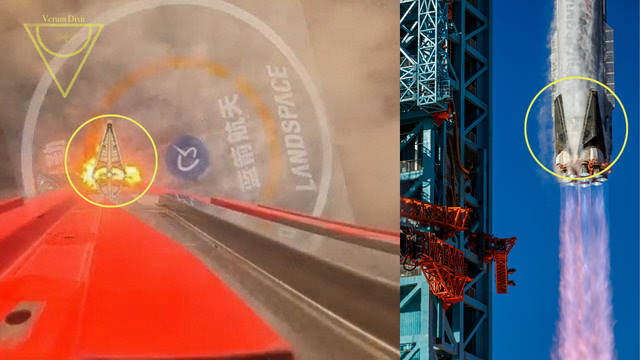
The countries’ space initials gained public recognition first on December 3rd, 2025, when, after a seemingly normal launch of an orbital stage engine, an abnormal combustion failure caused the booster to change its trajectory and explode. As later identified by the engineers, during the landing burn, some debris impacted the pad edge, resulting in a failure to land.
While the landing was not executed as expected, LandSpace, a leading Chinese enterprise in the operation of space transportation systems responsible for the Zhuque-3, deemed this test successful, as the flight validated reentry, thermal protection, and guidance technologies; therefore, the key objectives were achieved. The minor landing issue further confirms the necessity of calculating every possible environmental influence to avoid interference and clearly illustrates the strategic planning required to create these optimal circumstances.
Following the private companies’ landing failure, CASC’s team attempted a test of their own technology, launching the Long March 10 on February 11, 2026, using data from previous attempts to effectively validate the reentry technology. This was not a full orbital recovery, instead, it featured a suborbital attitude profile and provided crucial information for upcoming lunar missions. By July 10th, the Long March 10 B successfully completed its first orbital-class booster recovery after a 6 to 10-minute separation using the Lighangze vessel’s pretensioned cable grid in the South Chinese Sea. CASC described this as the country’s first successful recovery of a first-stage booster and the world’s first working net-based recovery of such a vehicle. Mao Ning, the spokesperson of the Foreign Ministry, called it a historic day and a major leap towards reusable capabilities.
Arriving on August 19, 2026, LandSpace launched their Zhuque-3, a stainless-steel first stage equipped with four landing legs, from the Dongfeng Commercial Space Innovation Pilot Zone. The booster reached an altitude of about 150 km, after which the first stage returned following a 390 km descent, landing on the pad prepared in Minqin County, Gansu. It deployed its four landing legs and achieved a propulsive soft touchdown, showcasing a distinctly more advanced technology than that used by Musk’s Space Agency, while also outperforming the nation’s federally funded recovery technology yet contributing to their ambition. The company plans to targed designs with higher payload, to effectively support the future lunar missions. These reusable first stages will drastically reduce the cost of space missions ,as this part of the craft is one of the most expensive ones.
This technology is truly distinct from any previously seen landing aids. Although there have been similar startups within Chinese entities, none have progressed to the point of live testing and successfully landing without the assistance of any vertical towers, such as those seen in SpaceX’s landings or the previously mentioned cable-net system. LandSpace’s innovative approach has the potential to surpass its American rivals in the lunar space race. The landing legs, requiring only a pad to land on, could, and are very much expected to transform the space industry. This innovative starship technology is expected to significantly transform the manufacturing of these vehicles and explonentionally raise space traffic.
Many entities operating LEO megaconstellations -groups of satellites working together in low-Earth orbit- such as Guowang/Xingwang and Qianfan/Thousand Sails have already expressed interest and projected that they will require hundreds of launches.
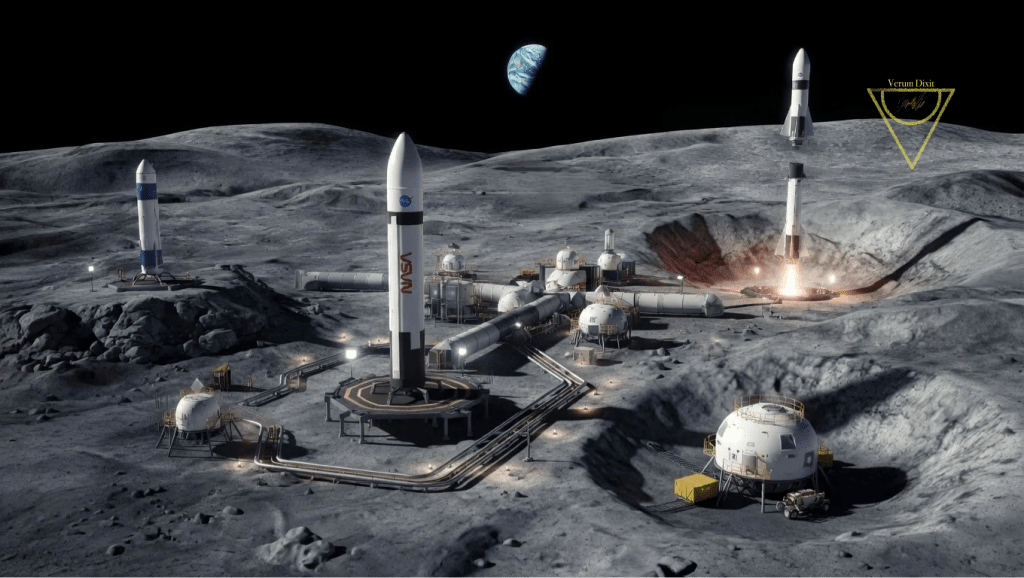
China’s strategic space program also includes crewed lunar landings by 2030, with the goal of establishing a permanent base there, similar to the USA, which is hinting at hundreds, if not thousands, of potential takeoffs.
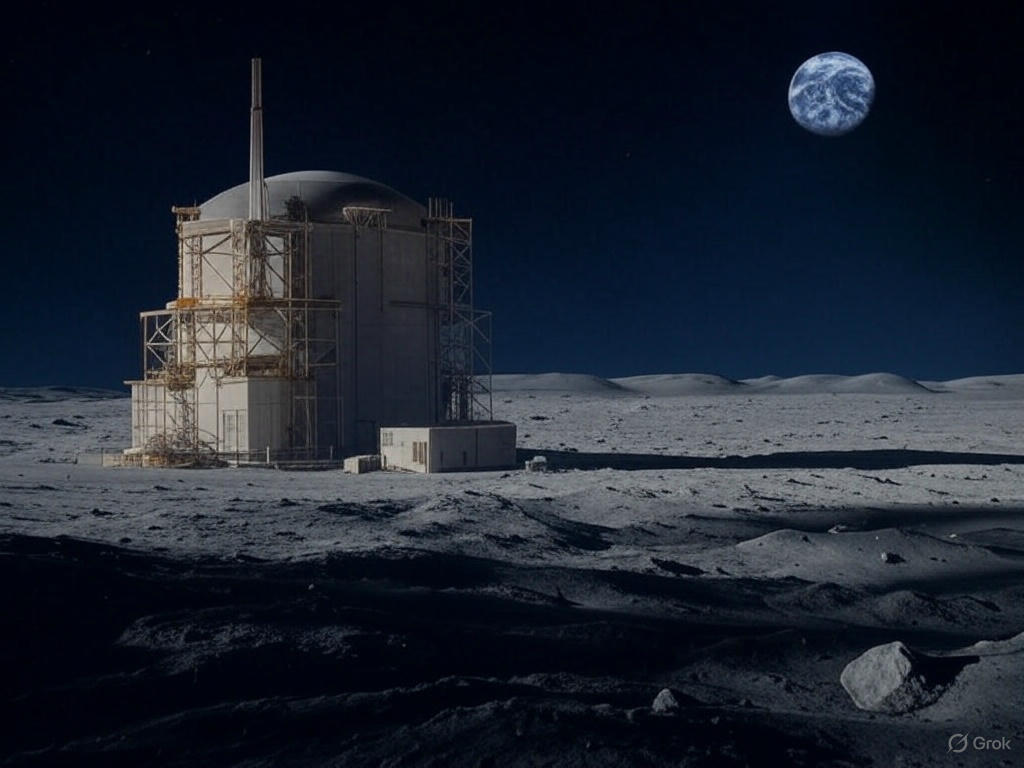
China vs. USA: The Race for Nuclear Power Plants on the Moon
Space exploration is thriving, with groundbreaking achievements occurring daily. With that the rise of private aerospace organizations represents a significant shift in the industry, moving from a highly exclusive oligopoly to…
While we await the Chinese Academy of Sciences, whom has joined in for the upcoming test of the Long March 12 series, take some time to watch the full 9-minute video of the Zhuque-3 orbital flight by clicking here. To stay up to date with the quickly evolving industry, don’t forget to subscribe to our newsletter.