




Researchers Believe They Have Found Jesus Christ’s Original Burial Site.
Recent news has rapidly captured the internet’s attention, claiming that new archaeological discoveries have uncovered the body of Jesus Christ in line with the accounts found in the Gospels and biblical scriptures
Ancient body found in pyramid’s hidden chamber
The newly emerging internet theory, largely originating from Dr. Paul and Michael Warner, suggests that the finding was discovered within one of the hidden chambers of the Egyptian Pyramids. This theory links the recent discovery of a ~4,400-year-old mastaba tomb at Saqqara’s Mariette necropolis, unearthed on September 7, 2026, and claims that this might indeed be the body of the so-called Saviour, along with the Ark of the Covenant, all situated within a hidden tomb withnin one of the Egyptian Pyramids. This speculation, alongside the actual discovery, has quickly spread online, unfortunately mostly through channels and personnel in the scientific or journalistic industry who, instead of conducting proper research, have opted for quick clickbait and altered the real facts to fit their narrative. Josep Cervelló and his team’s actual discovery, however, clearly explains that what they found was a late fifth-dynasty tomb featuring painted reliefs of agricultural scenes and offerings, funerary chapels, and standard Old Kingdom burial arrangements. The burial belonged to Younmin and his father Iti, whose bodies have indeed been found; however, the location was, as previously referenced, NOT within any pyramid, rather nearby, and there is nothing that links this finding to Jesus or other biblical references. Here is the missions home page; Spanish-Egyptian Archaeological Mission in Saqqara, SEAM
The actual finding related to Jesus
However, do not let yourself be fooled into thinking that this finding is just another online hoax, because the momentum of online conspiracy theories did indeed originate from what scientists believe to be the actual body of Jesus, found perfectly aligned with the biblical accounts of his potential burial site. So, let’s dig into it, shall we!?
Back in May 2022, excavations commenced beneath Jerusalem’s Church of the Holy Sepulchre as part of a project named “Grandi Scavi di Ateneo” / Hagia Polis Project. The work was commissioned by the Israel Antiquities Authority and, while under serious scrutiny, received approval from the Greek Orthodox community of Jerusalem. Francesca Romana Stasolla, Professor of Christian and Medieval Archaeology at Sapienza University of Rome (Università degli Studi di Roma “La Sapienza”), was appointed as the head of the research group, as reported by the Liber Annuus. The actual digging took place right below the traditional site of the crucifixion, burial, and resurrection in Jerusalem’s old city’s Churh of the Holy Sepulchre and its surroundings. But here comes the part that convinced scientists around the world, with no doubt, that this is indeed the original tomb of Jesus Christus. The excavations were requested as part of a floor restoration project, which is why the media was not informed in a timely manner; it started as a simple carpentry job. However, as the project reached its final phases, the months of digging uncovered a landscape matching the Gospel descriptions of Jesus‘ burial setting, which was immediately recognized by the custodians and could no longer be ignored.

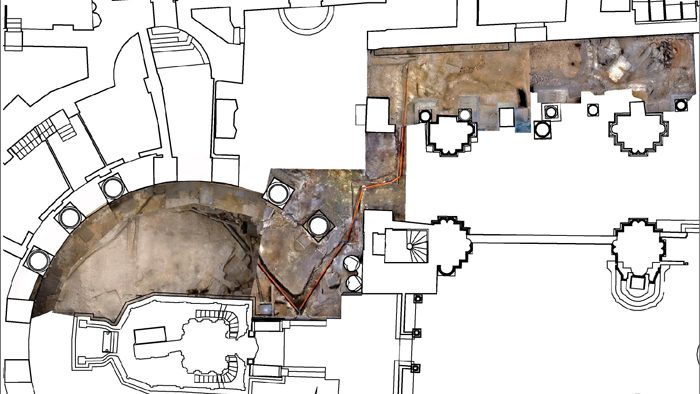
Preliminary reports began to surface by the end of 2025, and by 2026, the campaign was officially published in the Journal Liber Annuus. However, mainstream media did not catch up until late August 2026, unfortunately mixing up the Spanish excavation project with the one taking place in Jerusalem and suggesting that Jesus’s body was found under the pyramids, ultimately confusing audiences worldwide and signaling yet another hoax.
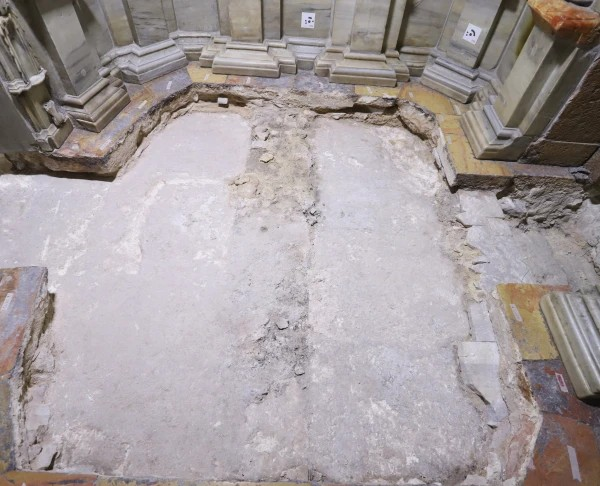
So, what was truly found in Jerusalem? The excavations uncovered a site, that would have began as a stone quarry with multiple phases of extraction and was later abandoned and repurposed for agriculture. Small cultivated plots provide evidence of vines, grapes, olives, figs, and other plants cultivation withnin the area. The discovered rock-cut tombs, carved into the bedrock, along with chambers blocked by specific Roman structures dating back to the 2nd and 3rd centuries, reveal that the site was used as a burial ground following the quarry’s abandonment and its partial conversion into agricultural terraces, well before Hadrian’s urban leveling of the area around 130–136 CE, which filled in the quarry and later obstructed the chambers. The site was later isolated around the 4th century by the builders of Constantine and was cleared around a specific tomb, which was then monumentalized, yet neither in this grave nor in any of the other chambers were human remains, or in fact a single human bone discovered. But despite what wasn’t found, what was unearthed aligns perfectly with the biblical accounts of the burial site of Christ.

In the Bible, St. John 19:41 describes the place of crucifixion amidst an old garden with a single new tomb that has not yet been used. The rock-cut tombs match the descriptions provided in Matthew, Luke, and Mark, and furthermore, St. John 19:20 and Hebrews 13:12 clearly explain that the site of the crucifixion was outside the old city walls, matching the excavation site. The proximity of the site also aligns perfectly with the accounts, being close enough to allow a quick burial before the Sabbath would begin, yet still outside the previous city walls. Archaeologists have found among the burial sites tens of thousands of pottery fragments from the Iron Age onwards, many coins from the Constantinian era, metallurgical residues, and numerous other fragments, however, they claim that none of them even remotely mentions the name Jesus and previously discussed, no sign of human remains was found within these graves, yet the matching details of the location itself convinced them that this site is likely the exact place where Jesus would have been crucified.
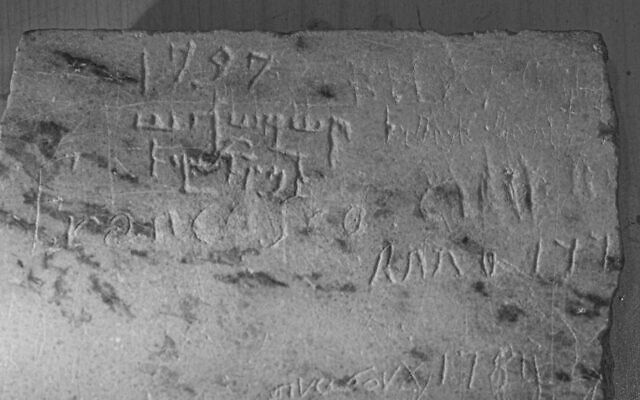
And while these artifacts test physical compatibility with the ancient texts, experts claim it could take years, if not decades, to analyze all of them. In fact, there is so much material that a complete list of the findings has yet to be compiled, and it will likely be months until this is accomplished.
The question still remains unanswered, and will be for some time, have we found the Saviours burrial, and if yes, where has all the remains gone, many animal bones have been found, but not human, nor anything mysterious. The location match, yet, there isnt a single thing that could confirm it, or at least, not yet.
IF you wish to stay up to date about the recent and most significant archeological excavations, religious and ancient fundings subscribe to our newspaper, or head straigh to Archaeology Magazine or Liber Annuus.