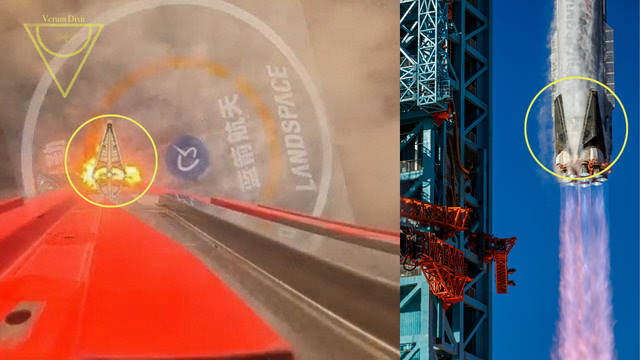







Space exploration is thriving, with groundbreaking achievements occurring daily. With that the rise of private aerospace organizations represents a significant shift in the industry, moving from a highly exclusive oligopoly to a gradually emerging monopoly, intensifying competition in an increasingly tight race.
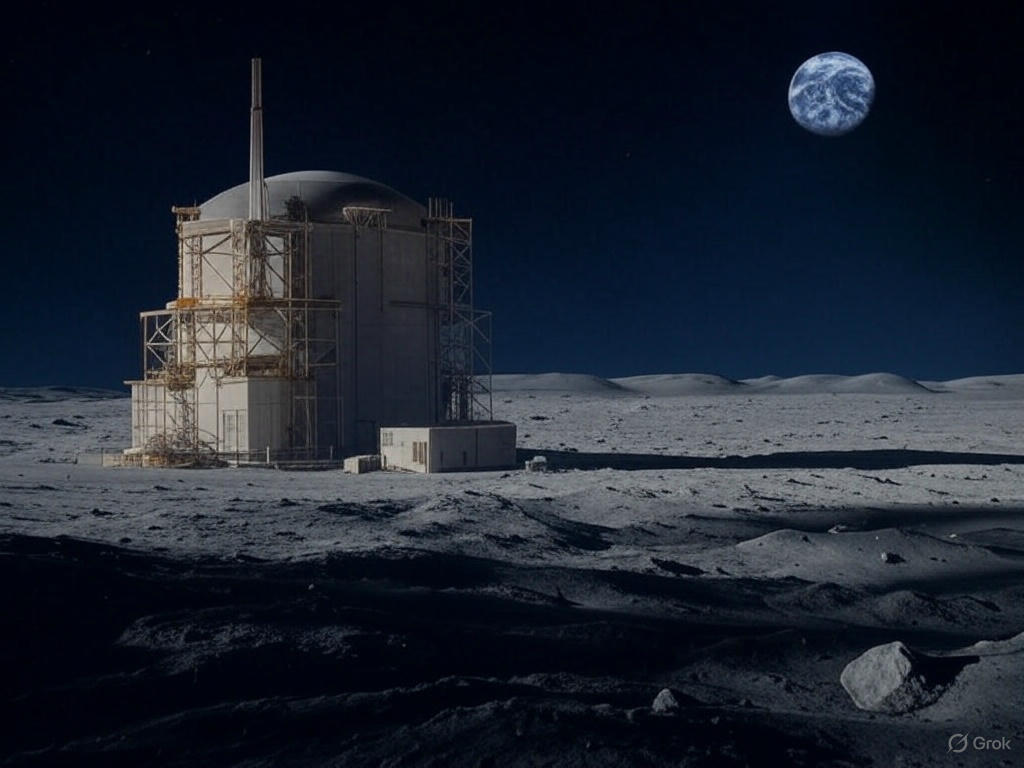
Fresh Insights from NASA and the International Lunar Research Station (ILRS) -led by Russia and China– further underscore the escalating market competition. Recent developments confirm that both of these organizations are eager to be the first to construct a nuclear power facility on the Moon’s surface. In the global race for lunar energy independence, this achievement could demonstrate leadership in space nuclear technology, significantly offset Earth’s energy demands, and expand our capacity for deep space exploration.
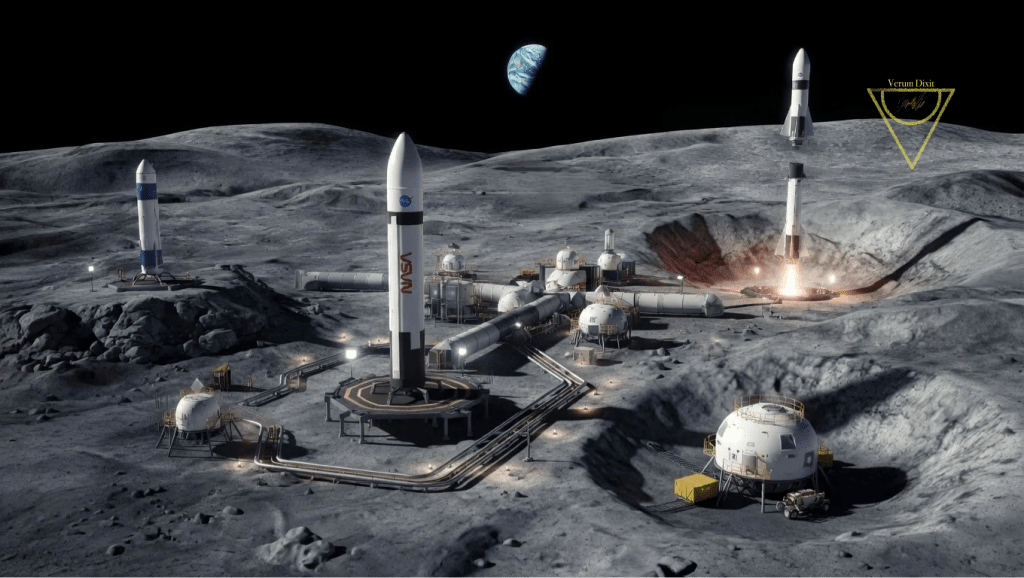
NASA, in partnership with the Department of Energy (DOE) and the Idaho National Laboratory (INL), demonstrated the Artemis lunar mission, incorporating numerous advancements aimed at returning humans to the Moon and establishing lunar bases by 2030s—culminating in a successful uncrewed launch in 2022. However, a critical challenge remained absent from the initial plans: the immense energy demand. The power required just to land on or lift off from the Moon’s surface is already substantial and sustaining human life within a high-tech lunar habitat presented an even greater obstacle. Given the limitations of current energy storage technologies, it would be unfeasible to continuously transport batteries to and from the Moon—not to mention the strain it would place on Earth’s energy infrastructure to meet the growing demand. Meanwhile, China and Russia also announced their joint initiative involving 17 countries to establish the International Lunar Research Station (ILRS) at the Moon’s south pole, with construction planned to begin in 2026—yet their initial proposal encountered challenges similar to those currently faced by NASA.

To overcome these challenges, both NASA and the ILRS have proposed their own plans, each emphasizing a critical step toward mission feasibility: the construction of a nuclear power plant on the lunar surface. Such a facility would be capable of generating sufficient electricity to sustain high-tech human habitats on the Moon and significantly extend our capacity for space exploration. Due to the Moon’s 14-day lunar nights, solar arrays offer limited power reliability. As an alternative to support long-term lunar exploration, nuclear power has been deemed the most suitable solution.
Although NASA seemed to have had a head start with the Fission Surface program initiating in 2006, and the plans for the construction of the ILRS were only publicly disclosed a decade later, both the FSP program and the later-announced Lunar research Station initiative have confirmed dates for possible construction and full operational status between 2026 and 2035. Each expedition aims to establish its own facility, complete with a nuclear reactor. While Russia and China focus on developing a research station, gathering and utilizing valuable resources unique to the Moon — such as helium-3, which is essential for fusion energy — the U.S based private organization’s main goal is to establish a kind of human colony, featuring advanced habitation capsules capable of supporting and sustaining long-term life.
Fission Surface Power Project
The FSP project was initiated in 2006 and is part of NASA’s broader strategy to develop autonomous nuclear power systems capable of supporting long-duration space missions and a fission-based system designed specifically for space conditions. This project gained significant momentum in 2018 when the successful testing of the Kilopower Reactor Using Stirling Technology (KRUSTY) was announced, demonstrating a viable small-scale 10-kilowatt nuclear reactor system that is both scalable and reliable for deep space missions. NASA and the Department of Energy (DOE) originally issued a request for proposals in 2021 for the development of a nuclear fission power system. However, the deployment of such a system is only projected for the early 2030s, with 2027 remaining the target year for the next human landing on the lunar surface. The nuclear reactor system integrates power conversion, heat rejection, and spaceflight technologies. Steve Johnson, Director of the Space Nuclear Power and Isotope Technologies Division at Idaho National Laboratory, has also reaffirmed the feasibility of the project’s start by 2026, noting that it will leverage both the rising advancements in commercial space transportation and the existing DOE facilities.Plans also confirmed that the manufacturing and assembly of the reactor will take place on Earth, where researchers can test it for safety and operational applications. Once verified, it will be transported to lunar orbit via a launch vehicle deployed by a lander. The reactor’s design will be supported by the Idaho National Laboratory, drawing on decades of nuclear research and advanced fuel development. Additionally, several unnamed private companies with expertise in nuclear reactors, spaceflight technology, and specialized equipment are expected to form teams for its construction.
You can find the official mission by clicking here
International Lunar Research Station Initiative
The ILRS — a joint venture that is part of China’s broader “555 Project” — involves cooperation with Russia and 17 other countries, not all of which have been publicly named. The project is scheduled to break ground in 2026, marking the start of construction for a permanent lunar base. China’s commitment to the initiative was further affirmed when Pei Zhaoyu, Chief Engineer of the Chang’e-8 mission, presented the nuclear power option at a Shanghai conference in April 2025, signaling Beijing’s long-term vision. China, leading the initiative aims to become the leading major space power, with lunar landing planned for 2030. Wu Weiren, Chief Designer of China’s lunar exploration program, emphasized the importance of Russia’s expertise in space-based nuclear technology and expressed hope for the successful deployment of the reactor. Slated for 2028, the Chang’e-8 mission will aim to lay the groundwork for the station and install initial infrastructure, including the power systems. The project is expected to reach its second major milestone between 2033 and 2035, when China and Russia plan to deliver and install the nuclear reactor and bring the station into operation.
You can find the official mission by clicking here
Whether the Chinese-Russian collaboration or the U.S.-based NASA achieves lunar energy independence first remains to be seen, it will undoubtedly be exciting to watch these two major aerospace pioneers compete for such a remarkable and unprecedented achievement. Stay updated on current and future space advancements—subscribe to our newsletter today.