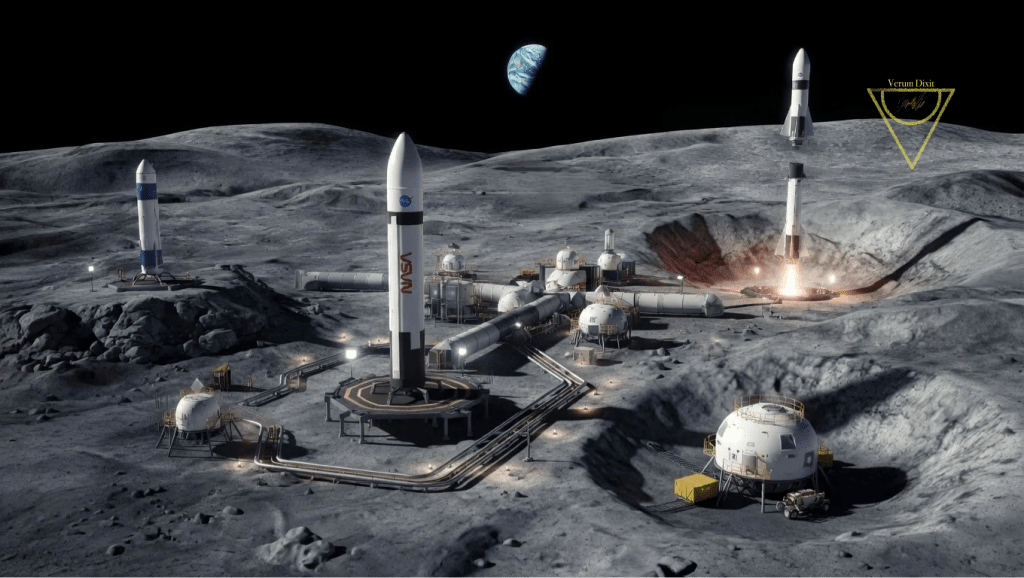







In 2025, increasing rumors and conspiracies spread across the Internet debating whether the USA actually landed on the moon in 1967 or if what the world witnessed was merely a stunt. Recent news and legal documents from the COVID-19 era, along with unclassified records, including recently surfaced documentation related to the assassination of JFK, clearly reveal the undisclosed and unethical practices of some government-funded organizations and the government itself. This has led to a significant number of people globally doubting whether humanity ever landed on the moon, that is until now.
President Donald Trump just signed America’s first space policy on December 18, 2025, titled “Ensuring American Space Superiority,” which outlines a structured plan to return America to the Moon. Trump’s involvement in space programs is not surprising; rather, it comes as a much-anticipated moment. During his first term from 2017 to 2021, he accelerated the Artemis Program, setting an ambitious initial goal of returning humans to the Moon by 2024. However, under the Biden administration, this project has been placed on the back burner, resulting in unforeseen delays in the timeline but after his reelection, it was only a matter of time until Trump picked up the space programs again and revitalized the nation’s aspirations for lunar exploration.
Why can’t we just return to the moon?
Today we are unable to return to the Moon not because of technical difficulties, but more due to the economic hurdles that projects of this scale involve. Shortly after the ‘69 landing, the Apollo-era factories and infrastructures, including those in Russia, were shut down and dismantled for scrap as a result of cost-related cuts during the Cold War, and the key components are no longer manufactured by any company. Since then, multiple initiatives have aimed to recreate factories that are sophisticated enough to support the next generation of rocket engineering, yet none have succeeded in fully achieving this ambitious goal, leaving us at a standstill in our lunar exploration efforts. This is where the Artemis mission comes into play.
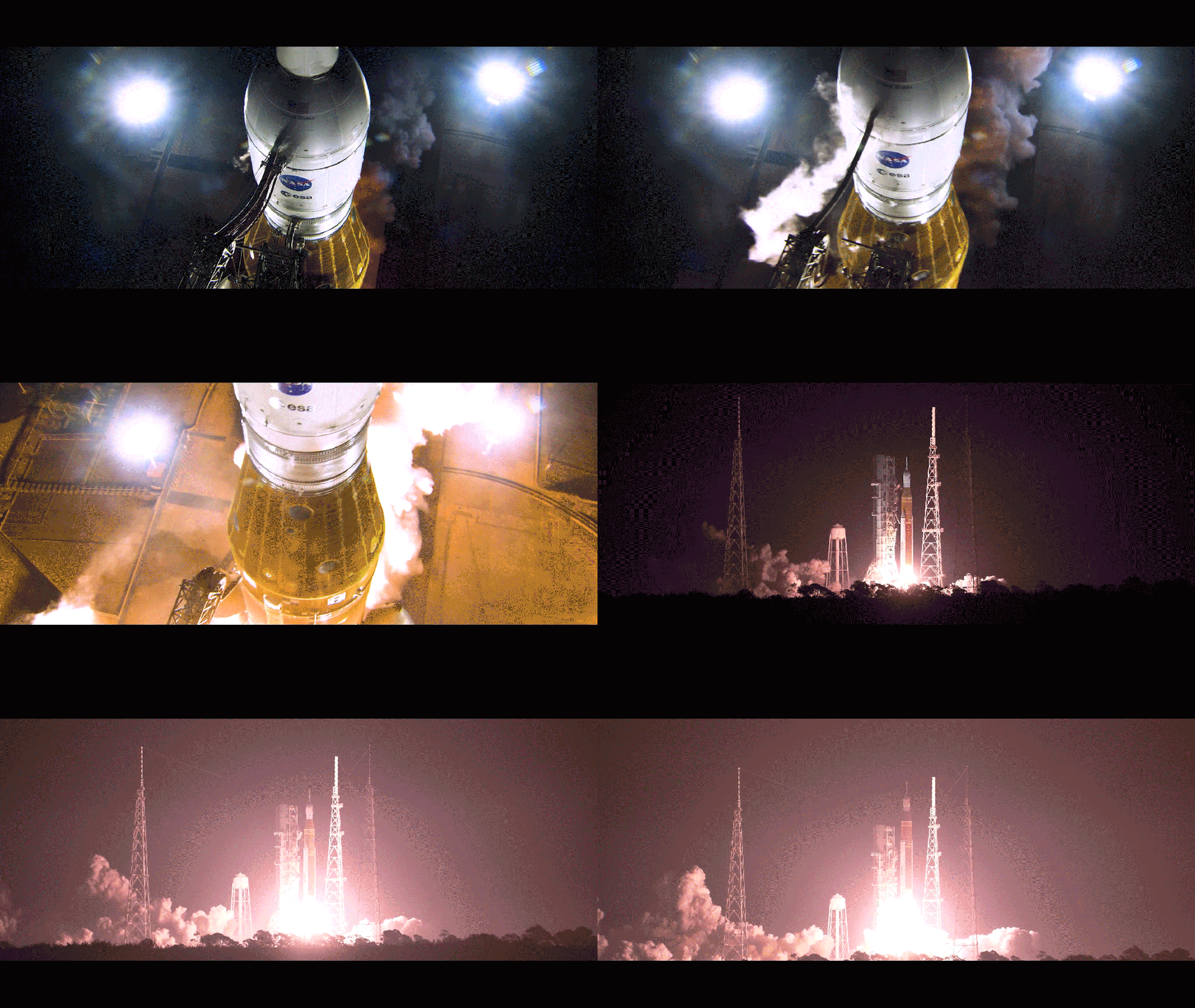
The Artemis mission is NASA’s latest initiative, aiming to break this 54–year silence and return humans to the Moon. However, this effort goes beyond a simple return! This time, the objective is to “establish a community on the Moon, driving a new lunar economy and inspiring new generations,” as stated by their official press page. The first stage was an uncrewed test flight in 2022, while Artemis 2, the next step for the mission’s success, is a crewed test flight planned for 2026 that will orbit the Moon before returning to Earth, and the third stage will be the mission that aims to land humans back on the lunar surface.
The program’s ambitions extend far beyond mere symbolism or national pride, as the US strives to reassert space dominance, outpace China, and win the second space race as we explained in one of our previous articles. Among NASA’s main goals is to establish a permanent presence on the Moon, outsource energy farming, and facilitate commercialization at both private and federal levels. The Artemis Road Plan outlines intentions to begin the construction of a permanent Lunar Outpost at the Moon’s south pole by 2030, complete with inhabitants and resource extraction capabilities along with the development of the “Golden Dome“—an orbital-based defense system. Deployments of multiple nuclear reactors in orbit will soon follow this timeline to provide sufficient and constant energy for these needs. By 2030, NASA also aims to replace the entire International Space Station (ISS) with new commercial space stations, boosting private investment while utilizing a Lunar base as a stepping stone for the upcoming Mars mission, which is not yet specified in the timeline but is included in the roadmap.
While this may seem like a tight competition between American private and federal space agencies, particularly with NASA at the forefront of the mission, it is, in fact, a collaborative effort among these organizations. SpaceX, Blue Origin, and even the Canadian Space Agency are actively partnering on different facets of the mission, merging their expertise to enhance technology and collectively restore US leadership in space exploration.The proposed investment exceeds $50 billion in space by 2028. However, history suggests that such projects often exceed their initial estimates. By then, the anticipated 2026 Artemis II crewed mission and the approaching deadline for Artemis III should inspire confidence in the mission’s success and enhance its reputation giving us a clearer picture overall of its potential for success.
If you wish to stay up to date with the intensifying U.S.-China space race and the latest developments in space exploration, as well as NASA’s Artemis mission, subscribe to our newsletter and for real-time updates and live coverage, follow NASA’s official Artemis Program channels.

Subscribe to continue reading
Subscribe to get access to the rest of this post and other subscriber-only content.