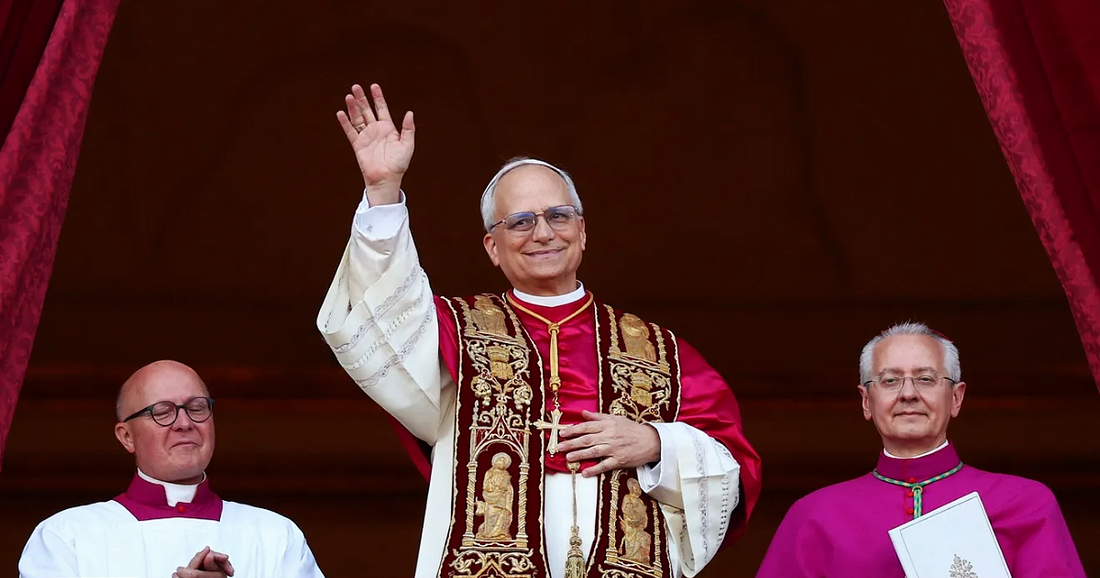






On May 8, 2025, the Sistine Chapel’s chimney released white smoke, announcing the election of Cardinal Robert Prevost as Pope Leo XIV, the first American to lead the Catholic Church as its 267th pontiff. The 69-year-old Chicago-born, Peruvian-naturalized cardinal, chosen by a conclave of 133 cardinals is a staunch conservative whose doctrinal fidelity promises to restore the Church’s traditional foundations.
Pope Leo XIV’s conservative stance is poised to rejuvenate a Catholic Church beleaguered by secularism and internal discord. A firm defender of traditional teachings, Prevost has consistently opposed progressive reforms, such as the ordination of women as deacons and loosening restrictions on married priests, aligning with the Church’s historical positions on these matters. His tenure in Peru, where he served as Bishop of Chiclayo, demonstrated his commitment to fostering vibrant, faith-driven communities rooted in Catholic doctrine, earning praise for his “uncompromising yet pastoral” approach.
Despite unverified allegations of mishandling abuse cases—denied by Prevost and dismissed by supporters as attempts to tarnish his reputation—his election reflects the cardinals’ desire for a leader who will prioritize doctrinal purity over populist concessions. His conservative vision, grounded in the Church’s moral teachings, is seen as a beacon for Catholics seeking a return to the Church’s foundational values and has a robust record of upholding Catholic orthodoxy, earning him the trust of traditionalists within the College of Cardinals.
Supporters on platforms like X have hailed his election as a “triumph for tradition,” anticipating that his firm hand will guide the Church toward spiritual renewal. As he prepares for his first Urbi et Orbi blessing, Pope Leo XIV stands ready to restore the Catholic Church’s moral and spiritual authority, offering a clear path forward for a global faithful yearning for steadfast leadership.
Prevost is well-positioned to counter the erosion of Catholic identity in the West while nurturing growth in Africa and Asia. His fluency in Spanish and English, coupled with his experience in the Global South, equips him to unite diverse Catholic communities under a shared commitment to orthodoxy.
As the new pope assumes the papacy, his conservative leadership offers hope for a revitalized Church, particularly in regions where faith has waned. With a focus on strengthening catechesis, defending the sanctity of life, and reinforcing traditional liturgy,