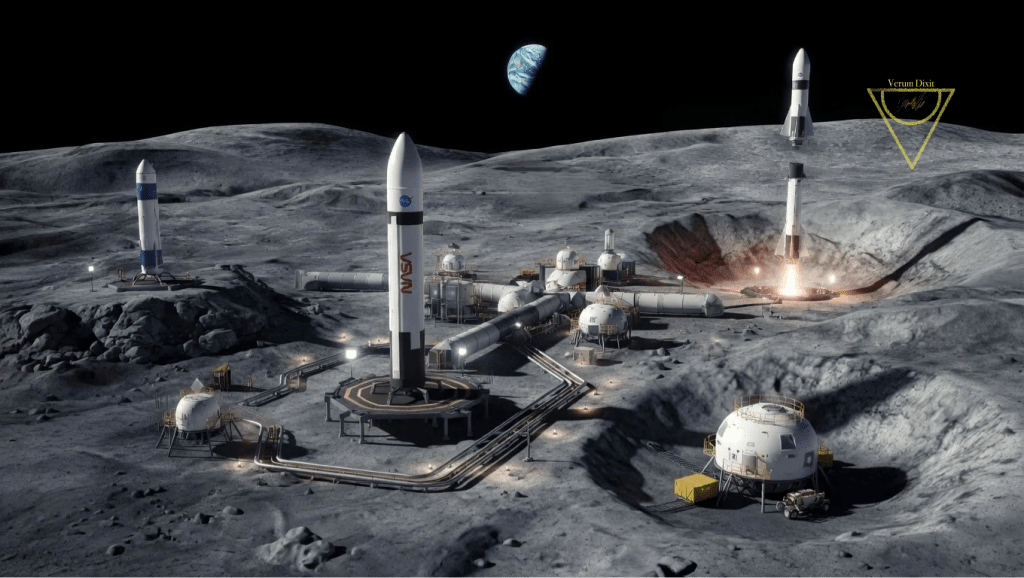







Jeff Bezos, founder of Amazon once again made headlines by pushing forward with the company’s latest collaboration with NASA, and launched its first set of satellites to deliver satellite-based internet services similar to those offered by Starlink. In the beginning of 2019, Bezos has invested approximately $10 billion USD to establish the Project Kuiper. At its core, the initiative aims to expand global internet coverage by deploying a satellite network consisting of over 3,600 satellite orbiting Earths low orbit.
As part of the testing phase, in October, 2023 two prototypes were launched, from which both returned signals reporting %100 accuracy later in January, 2024. Following the successful test DIRECTV Latin America announced it’s partnership with Bezos to serve South America once the project has became operational, gaining a reputation and allowing the millionaire to sign further contracts with Corporate giants such as Vodafone, SKY Brasil and NTT, securing the future of Project Kuiper.
“We have secured more than 80 launches to deploy that initial constellation, each one adding dozens of satellites to the network” -stated by Amazon’s spokesperson
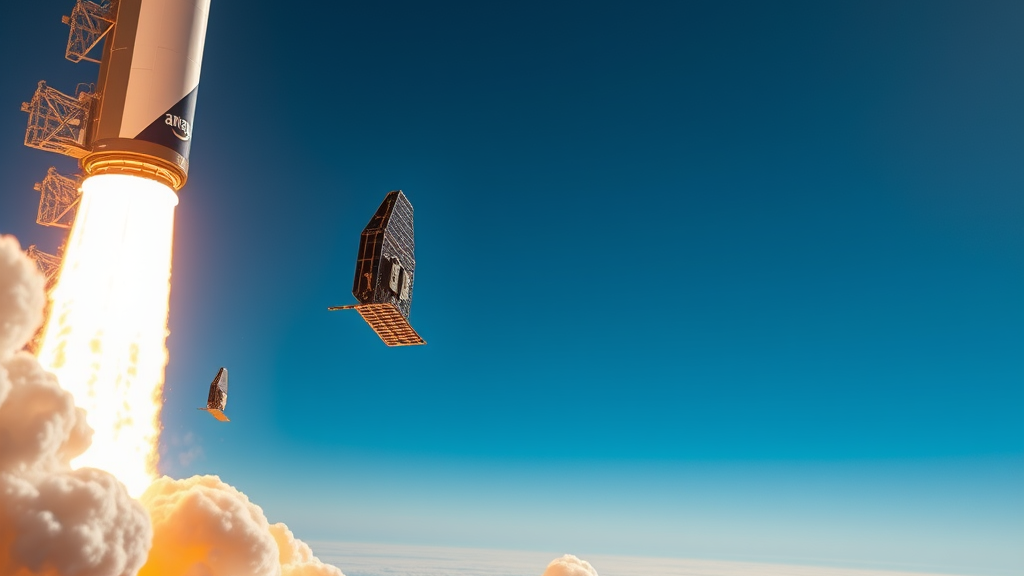
Among the secured partnerships was NASA, contributing with its Atlas V rocket. on 28th of April, 2025, NASA, commissioned by Amazon, launched Mission KA-01 , carrying 27 satellites and with it marking a start of the company’s satellite based broadband service. The 27 deployed satellites will now undergo a sequence of automated procedures while traveling at approximately 17,000 miles per hour, as they ascend to their designated orbit at 392 miles above Earth where they will commence operations.
Over the next few years the Kupier team will conduct a series of launches, each in partnership with a different contractor. These include 38 launches aboard United Launch Alience’s (ULA) larger Vulcan Centaur rocket, and 30 additional launches contracted to SpaceX and Arianespace.
Amazon’s Project Kuiper will offer a range of speeds tailored to different user needs—up to 100 Mbps with its ultra-compact terminal, 400 Mbps with the standard terminal, and up to 1 Gbps with the large terminal. The system benefits from low latency due to its low Earth orbit (LEO) satellite constellation, making it well-suited for real-time applications such as video calls and gaming. It also supports 5G backhaul and has established partnerships with major providers like Verizon and Vodafone. The service aims to provide connectivity across latitudes between 56°N and 56°S, covering most of North and South America, Africa, Australia, Asia, and Europe, although not all regions will have immediate service at launch. As of April 2025, the Kuiper team has grown to over 2,000 employees, with continued hiring planned to support manufacturing and operations.
🛰️ Upcoming Project Kuiper Launches
KV-01- ULA
As part of the KV-01 mission, Amazon plans to deploy further 40 satellites aboard the Vulcan Centaur VC6L rocket by the end of 2025 advancing its efforts to establish a global satellite system.
TBD- Blue Origin
In the first stage of mission TBD further 50 satellites planned for launch in 2026 aboard New Glenn, a rocket from Blue Origin– the millionaires own aerospace company.
TBD- Arianespace
Arianespace will launch 30 satellites aboard its Ariane 64 Block 1 rocket from the Kourou ELA-4 launch site as part of the TBD mission—marking the first of six planned missions out of a total of 18 contracted launches with Arianespace.

Subscribe to continue reading
Subscribe to get access to the rest of this post and other subscriber-only content.