






Our teeth have always been one of the most vulnerable and precious parts of our body. Newer, better toothbrushes, toothpastes, mouthwashes, and many other hygienic tools are emerging on the market, aiming to provide us with improved resources for caring for our teeth. Yet still, due to factors such as an excessively unhealthy diet, smoking, calcium deficiency, or other diseases that cause degeneration or corrosion, the medical industry has long been using different types of materials to create substitutes for teeth, which can replace either the surface layer or the entire tooth, sometimes one or even all if needed. There is a vast and multi-level industry built around manufacturing these artificial teeth all over the world, ranging from inexpensive alternatives to true pearls that are collected and carved down to fit the shape of a tooth. But it seems that we are on the verge of a new dental era, potentially leading to the end of artificial teeth in every form.
Recent advancements in regenerative medicine and biotechnology are bringing us closer to a groundbreaking reality: a medicine that can regrow teeth. This development has the potential to revolutionize dental care, offering an alternative to traditional solutions like dentures and implants.
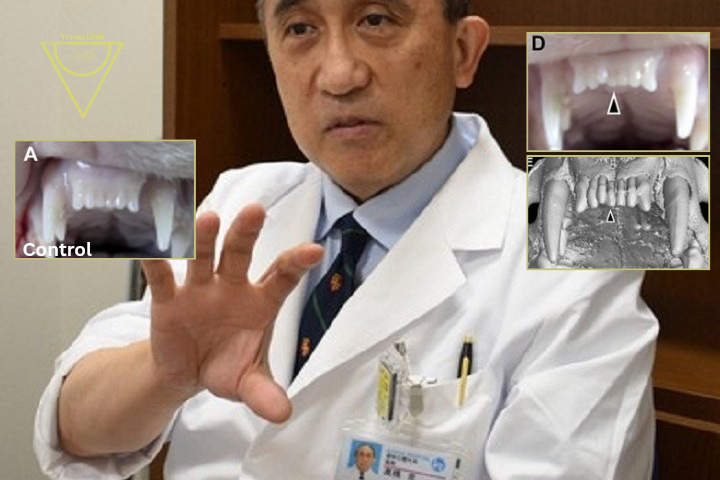
Evidently, humans are part of those species that, unlike some animals, cannot naturally generate teeth beyond the two sets we develop. Once permanent teeth are lost due to injury, decay, or disease, they cannot regrow, leaving us with the necessity to replace them with what is available, only if one can afford it, which is not the case in most scenarios. But would it not be easier if we could simply go to the doctor and grow another one? Well, that is exactly what the researcher Dr. Katsu Takahashi and his team envisioned.
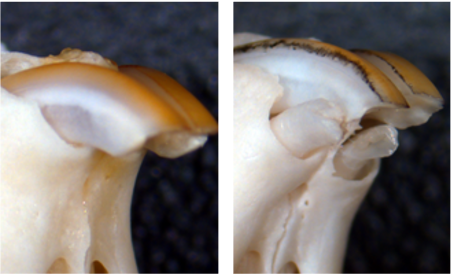
The research is being conducted at the Medical Research Institute of Kitano Hospital in Osaka, one of the most prominent medical research institutions worldwide. Katsu’s approach focuses on a protein called “uterine sensitization-associated gene-1 or USAG-1,” which inhibits the natural mechanisms that lead to tooth growth. By blocking this protein, researchers believe they can stimulate the growth of new teeth in humans. This experiment has already shown success in animal subjects such as mice, ferrets, and dogs, where scientists achieved complete success by successfully regrowing multiple teeth in various subjects back in 2021 according to the Science Journal.

Following their early success and three years of continuous research, Takahashi applied for approval of human clinical trials, which were granted, and the trials began in late 2024 at Kyoto University Hospital. Marking Dr. Katsu Takahashi’s team’s first major breakthrough, the trials performed as expected and demonstrated the potential to regrow not just one but multiple teeth in numerous human subjects, according to the research. Building upon this success, the team will continue to focus on the second and third phases of testing, initially targeting patients with congenital tooth agenesis (a condition in which individuals are born without teeth), and eventually enrolling healthy adult volunteers who have lost their teeth, aiming for broader distribution by 2030, with the hope of improving the quality of life for many. The drug essentially works by activating dormant tooth germ cells through the blockade of the USAG-1 protein in the body, stimulating tooth growth. Although there is currently no information available about the duration of this process, experts speculate that this drug could completely transform the orthodontics industry.
It may not only address the common need for replacement teeth but could also potentially correct misaligned teeth by regrowing and repositioning them in their ideal locations, thereby eliminating the need for aligners in some cases. The commercial development is already being promoted by Toregem BioPharma, a startup from Kyoto University incorporated in 2020, however, there is no definite information on when it will be available.
The possibility of tooth regeneration represents a paradigm shift in dentistry and regenerative medicine. It serves as a reminder of how science continues to push the boundaries of what was once thought impossible. If successful, this innovation could not only restore smiles but also improve the quality of life for millions of people worldwide. This industry shift could offer a much more modern, affordable, and quicker solution for dental issues and diseases. Following the success of this treatment, many scientists and institutions worldwide are likely to take inspiration and begin developing their own formulas or licensing from Tokyo University. However, it is crucial to remember that these advancements are still within clinical trial phases, and even after approval, they will likely be under strict scrutiny and control, which may result in a lengthy process before they become accessible to users.

The industry is Catching Up
As expected, the positive outcomes of Dr. Katsu’s research and rapid growth have already stimulated the industry. However, while the Japanese drug focuses on inhibiting specific proteins, other researchers are investigating the potential of stem cell therapies for tooth regrowth. These approaches involve the harvesting or production of stem cells, which are technically just young cells that have not yet been allocated to a specific location in the body, allowing them to develop into any type of cell. These cells can then be reintroduced into the enamel, dentin, or potentially even the roots of teeth to stimulate the regeneration of dental tissue. A group of Chinese researchers from Sichuan University and the Hospital of Stomatology, collaborating with Songtao Shi and Xi’an, has significantly contributed to this line of research by experimenting with urine-derived iPSCs for tooth-like structures in mice.
The experiments have already proven, for instance, that stem cells harvested from dental pulp, a soft tissue inside the tooth, can actually be cultivated into new dental structures. Some scientists have even managed to bioengineer teeth that mimic the properties of natural teeth, however, it is worth mentioning that these developments are still very much in the experimental stages and not ready for clinical trial applications. Most of these advancements focus more on tissue repair and experimental bioengineering than on the antibody-driven tooth regrowth observed in the Japanese human trials.
South Korea also has active research on tooth development, with prominent work at Yonsei University and some attempts at enamel and dentin repair. From the latest updates, there has even been a great rumor circulating that such advancements are ready to use and available; however, there isn’t much public information on this.
While we wait for these breakthroughs to transition from the laboratory to the clinic, one thing is certain: the future of dental care is bright. If you wish to follow the research, head straight to the official research page published by Kyoto University, and to stay updated on the rapidly advancing field of medical bioengineering, visit the Science Journal or subscribe to our newsletter.