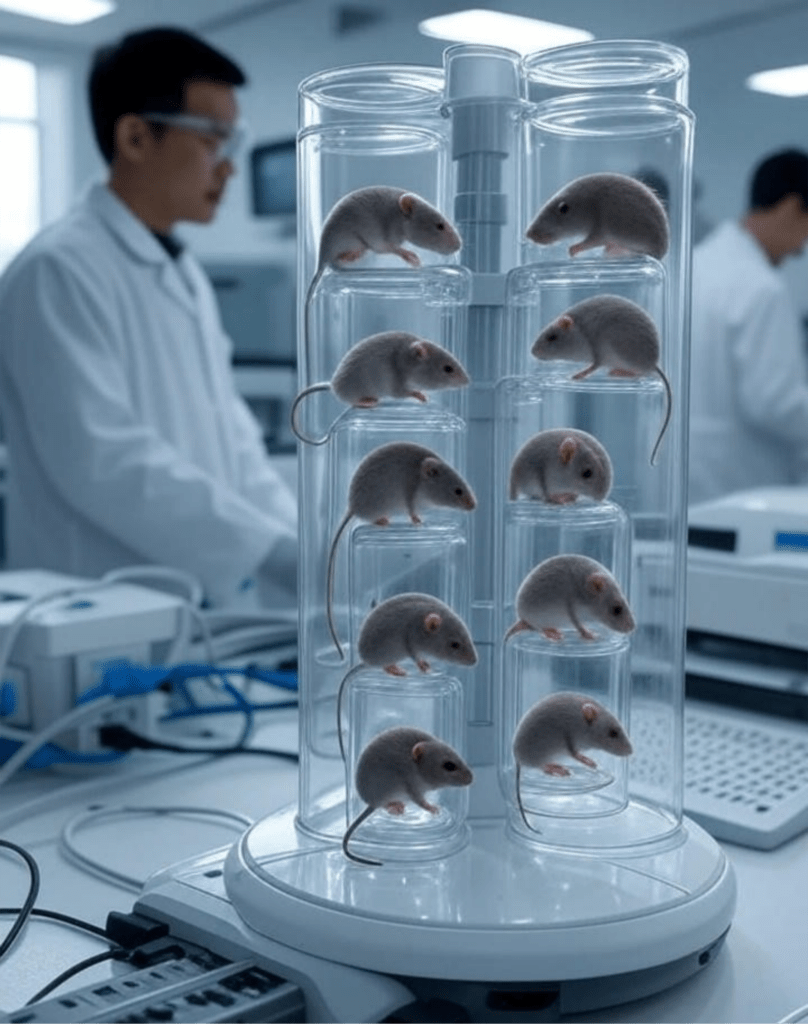






Researchers have long been exploring the real reasons why and how exactly cells age, with the aim of reversing this process and potentially expanding our liespan. Back in 2006, a Japanese scientist discovered induced pluripotent stem cells (IPSCs), which are technically re-programmed cells transformed from a mature state into a pluripotent (embryo-like stem cell) state by introducing four specific transcription factors. In his paper, Shinya Yamanaka utilized mouse cells to create IPSCs, however, he continued scaling it to a human version, which was successfully achieved in 2007. Later, in 2012, he shared a Nobel Prize with John B. Gurdon for their groundbreaking work in regenerative medicine, yet his work was still not exactly flawless, as it could not be applied practically. Re-setting cells sounds intriguing when experimenting in a lab dish yet applying this to living cells within the human body would be incredibly harmful. While these cells are programmed back to a much younger state, their size remains the same, meaning they will continue to grow endlesly. In the mice trials, some subjects experienced these cells growing into cancerous tumors.
Here comes Retro Biosciences into the picture, a clinical-stage longevity biotech company focused on developing therapies that target the cellular and molecular drivers of aging to prevent, reverse, or treat aging-related diseases. CEOs and co-founders Sheng Ding, a prominent stem cell and reprogramming researcher who is also a professor at UCSF Gladstone Institutes, and Matt Buckley, a scientist and bioengineer with a background in genetics and systems integration, launched Retro Biosciences in 2021 with the aid of Sam Altman, who provided the entire $180 million required to begin the research and feed the company’s ambitious plan to add “10 healthy years to the human lifespan“. Since then, the organization has grown to an enormous $1.8 billion pre-money valuation, demonstrating tremendous potential to conduct research on this scale and within this budget.

Following the succesfull start up, in 2025 OpenAI announced a major collaboration with Retro Bioscience offering a specialized biology-tuned version of GPT-4 RTR242. Retro then fed variants of the Yamanaka factors into the model, which redesigned them in a way suitable for human clinical trials. Not only that, but the redefined version achieved over 50-fold higher expression of stem cell reprogramming markers compared to the original wild-type factors. It also demonstrated better DNA damage repair, maintained differentiation potential, and improved efficiency. The AI model did not just enhance the formula; it re-engineered it into something that works not only in theory but is now being tested on humans. What makes Retro stand out is their background in alzheimer’s, dementia, and other age-related disease treatments. For the past five years, the organization has been working closely with patients suffering from age-related neurological diseases to study how human cells actually age and what safe methods exist to slow, control or even reverse cell aging yet the key achievement came with the major AI-reprogramming using RTR242 IND/enabling work and trial initiation. Retro targets the hallmarks of aging through cellular reprogramming and various other methods.
The key difference between their approach and that of Nobel Prize-winning researcher Shinya Yamanaka is that Retro aims for partial resetting rather than reverting the cells to their embryo-like state, stabilizing potential side effects and avoiding continuous, unlimited cell growth. This partial reprogramming resets the biological clock only slightly, allowing cells to be programmed to a younger state while still retaining their identity (for example, skin or heart cells), thus reducing most cancer risks associated with embryonic-like induced pluripotent stem cells (iPSCs). AI has enabled Retro to refine the Yamanaka factors, and as of December 2025, they have initiated human clinical trials on Alzheimer’s patients and other neurodegenerative conditions, as well as on cell and tissue reprogramming for blood and other disorders, all aimed at technically reversing human cell aging. Now it is still important to mention that the trials could take years, and for now, the company prioritizes curing patients with cell aging-related neurological diseases rather than actually reversing aging. Yet, as per Retro’s motto, their ultimate goal is to add 10 healthy years to our lifespan, so it is within their peripherals and the company’s quick advancement from first lab to clinical candidate, all within just 3 years, demonstrates a great ability to achieve this plan.
Retro’s rapid move to the clinic in a notoriously hard field positions it as a potential “generational pharma company” tackling one of humanity’s largest unmet needs. The field is moving fast, for the latest updates subscribe to our Newsletter or head directly to retro.bio .

Subscribe to continue reading
Subscribe to get access to the rest of this post and other subscriber-only content.