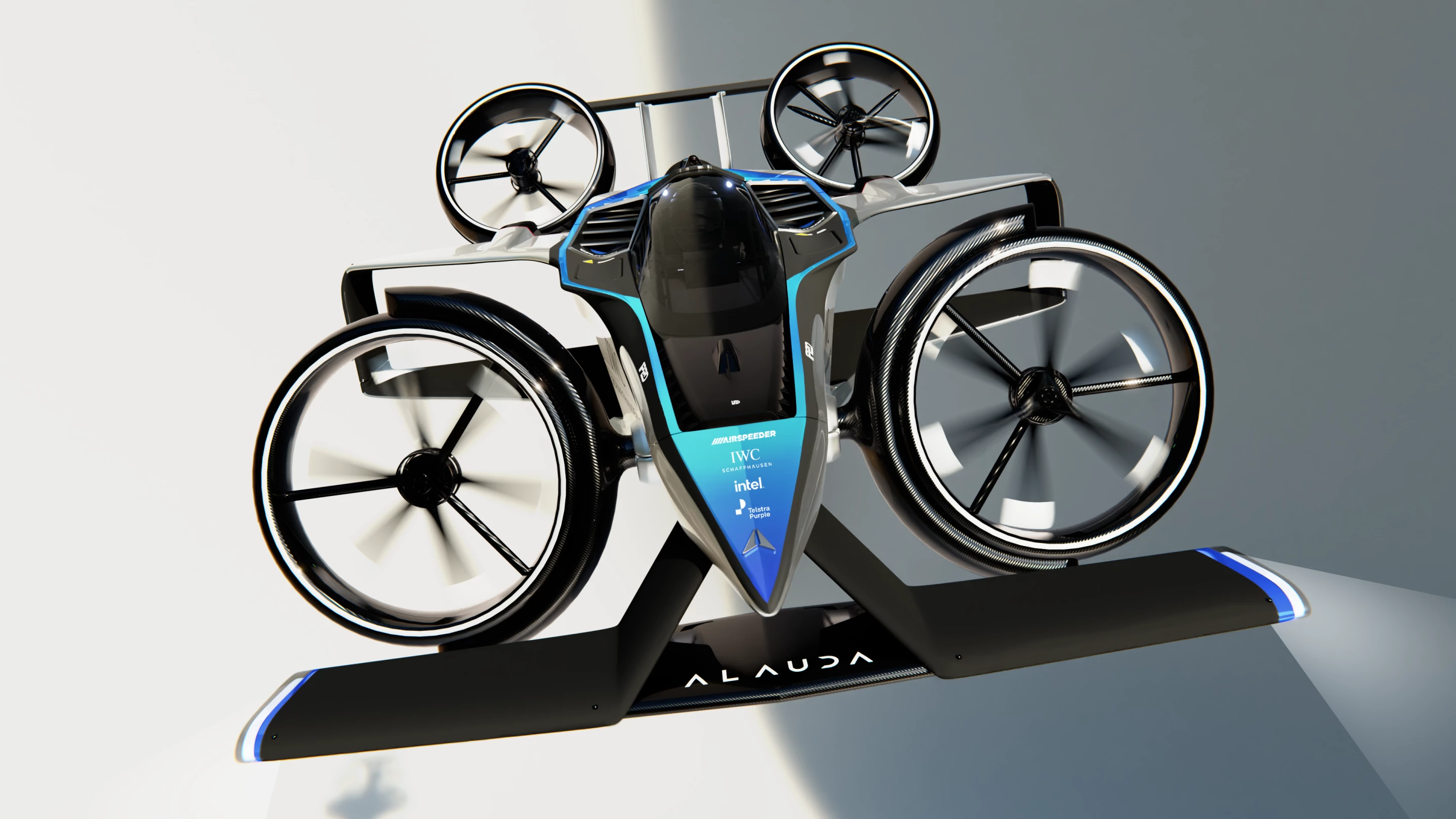






Say goodbye to traditional F1 cars as a brand new organisation has just emerged and unveiled its first crewed hydrogen powered flying race car, purpose built for the track. Welcome Airspeeder and their Mk4 model.
Airspeeder, a company developed by Alauda Aeronautics, is a flying car racing series founded to bring high-speed electric air racing into reality. Similar to the now-popular drone racing, these vehicles won’t soar high into the sky, but will instead focus on low-altitude, high-speed racing and extreme maneuverability. The organization was founded in 2020 with the goal of entering the eVTOL industry and creating a new competitive flying car racing league.
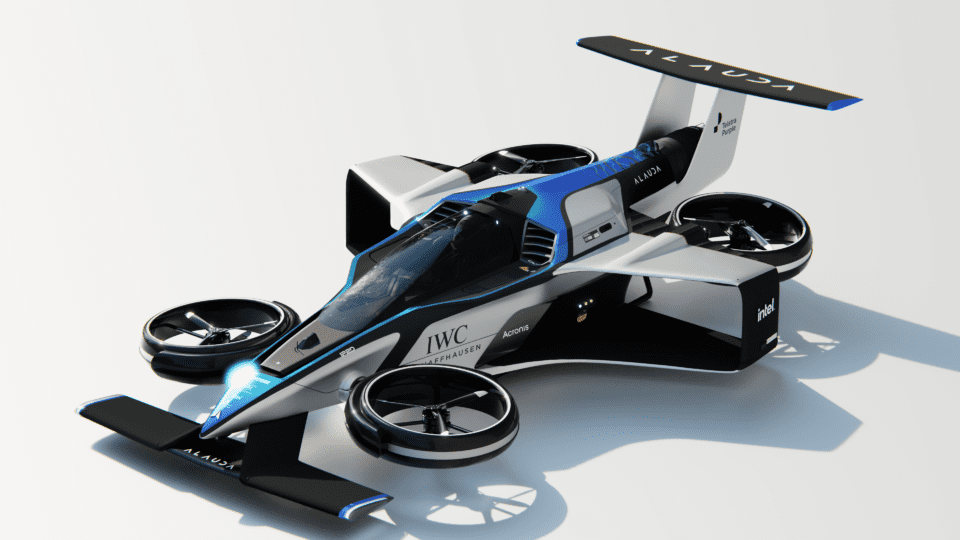
MK4 © 2025 by Airspeed is licensed under CC BY 4.0

This isn’t Airspeeder’s first trial, but rather a groundbreaking achievement following years of development. The company has been building AR-based race tracking and safety systems as part of its broader effort to revolutionize the advanced air mobility (AAM) industry. In 2021, they launched their first vehicle: the EXA series. Although it was electric, it did not feature the hydrogen-electric hybrid system now used in the Mk4. The Mk series followed in 2023 with the release of the Mk3 — the remotely operated predecessor to today’s flagship model. However, in an unexpected twist, their latest model is designed to be piloted by humans, marking a major shift from remote operation to crewed racing on specialized aerial tracks.
The vehicle uses eight ducted electric rotors, mounted in four pairs. These rotors spin rapidly—much like those on a racing drone—allowing the Mk4 to lift itself off the ground despite its nearly one-tonne weight. These rotors, along with the onboard systems, are powered by a hydrogen turpogenerator, making the vehicle fully electric. The onboard turbine burns green hydrogen to spin the generator, which delivers 1,000 kW of power—charging the batteries and supplying energy to the entire system. This revolutionary design allows the vehicle to operate while emitting only water vapor, rather than CO₂, as conventional cars typically do.
While the Mk4’s maximum altitude is relatively modest at around 60 meters, it boasts an astonishing top speed of 225 mph and a total range of 300 kilometers before the hydrogen tank requires refueling.Furthermore, the pilot is assisted by an AI-controlled, gimballed thrust-vectoring system that enables ultra-precise maneuvering—an essential feature at such high speeds and low altitudes. The vehicle is designed to follow augmented reality sky-tracks projected directly into the pilot’s field of view, much like something out of a science fiction film. No roads, no traffic—just high-speed aerial battles
Airspeeder tested the Mk4 in 2023 and, shortly after, proposed that its first crewed race would take place in 2024. However, this appears to have been postponed, as no public record of such an event exists. Whether the delay is due to licensing challenges or the continued development of the aircraft’s sophisticated AI systems, it will be interesting to see how far the organization has progressed two to three years since development first began
To stay up to date on the latest in flying car racing and Mk4 development, subscribe to our newsletter — or visit airspeeder.com for official updates and announcements and the Civil Aviation Safety Authority (CASA) for regulatory news and statements.

Subscribe to continue reading
Subscribe to get access to the rest of this post and other subscriber-only content.