






With the rise of private space organizations, it seems the industrial revolution has once again begun to flourish but this time, in space. Space logistics is here and ready to deliver! Atmos Space, a German aerospace company, has just reported its first successful landing, carrying three loads of deliveries.
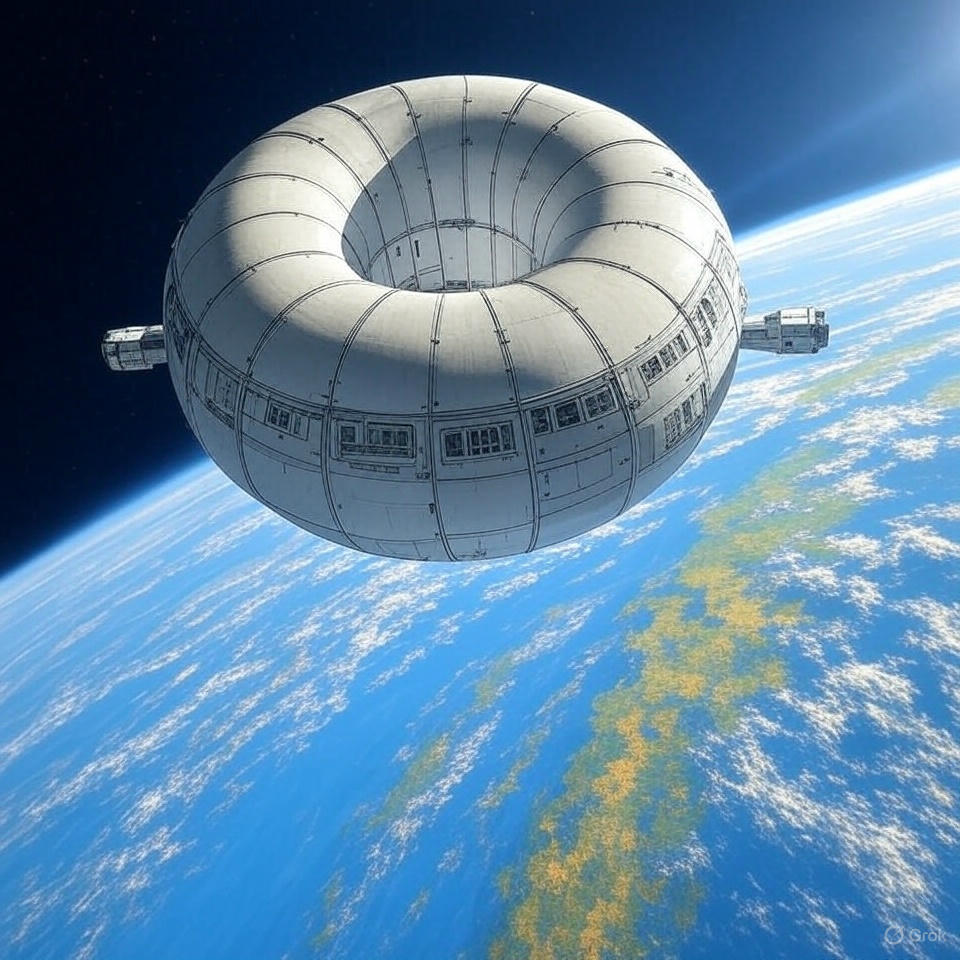
On April 21, 2025 The Phoenix 1’s inaugural mission launched as part of SpaceX’s Bandwagon–3 rideshare mission on a Falcon 9 rocket from Cape Canaveral Space Force Station, Florida. marked a historic milestone as the first private European company to successfully complete an orbital return mission. The capsule, featuring a unique doughnut-shaped design, carried 100 kilograms of payloads—including microgravity experiments from the German Aerospace Center (DLR), Japan’s IDDK, and the UK’s Frontier Space—demonstrating its potential to revolutionize space logistics. Despite its three-hour mission ending with a splashdown 2,000 kilometers off Brazil, the capsule arrived at the Re-Entry Interface Point (EIP) on the southeast Brazilian coast, transmitted critical data, validated key systems, and paved the way for future iterations.
The Phoenix 1 reentry capsule isn’t just a simple spacecraft; it has shown its potential to revolutionize the commercial space sector hinting at a future where space logistics could transform global supply chains. Its unique doughnut shape, paired with its inflatable heat shield—evoking the appearance of an alien craft—offers a groundbreaking approach to efficiently carry cargo to and from Earth. Furthermore, Atmos Space is aiming to deliver a logistical service, enabling organizations to achieve efficient and rapid cargo deliveries by entering low Earth orbit and returning to the atmosphere to deliver goods to different locations on Earth.
Strategic Partnership with ARX Robotics
Building on this debut, Atmos is already advancing Phoenix 2, slated for a 2026 launch, which will include its own propulsion system for targeted landings and enhanced payload capacity. Moreover, as reported by the organization in a recent announcement, which was also posted on X, Atmos Space Cargo has recently forged a strategic partnership with ARX Robotics to launch the Space Defence Alliance, aiming to create the world’s first Orbit-to-Ground Deployment Platform.
Announced in early May 2025, the alliance seeks to establish an orbital depot for deploying autonomous ground, sea, and air assets, supported by ARX’s Mithra OS and bolstered by a tactical investment from J14 European Resilience. This collaboration integrates Atmos’ Phoenix reentry technology, exemplified by the successful April 2025 Phoenix 1 mission, with ARX’s autonomous unmanned systems, enhancing Europe’s civil and defense logistics for rapid, targeted interventions in crises like disaster relief or military operations.
The company’s vision to provide affordable, reliable Earth-to-space-to-Earth logistics targets industries like life sciences and defense, addressing Europe’s reliance on non-European return vehicles like SpaceX’s Dragon. With €13.1 million in funding from the European Innovation Council and a contract for seven missions through 2027 with Space Cargo Unlimited, Atmos is positioning itself as a leader in sovereign space infrastructure. Yet, the rapid development timeline—building Phoenix 1 in under a year—and dependence on SpaceX for the initial launch highlight potential vulnerabilities. This ambitious push could either solidify Europe’s space presence or expose the limits of a young
To stay up to date on the latest developments in space re-entry technology, subscribe to our newsletter — or head straight to Atmos Space Cargo’s official website to learn more about the Phoenix 1 capsule by clicking [here].

Subscribe to continue reading
Subscribe to get access to the rest of this post and other subscriber-only content.