FinalSpark: Pioneering the Era of Biocomputing
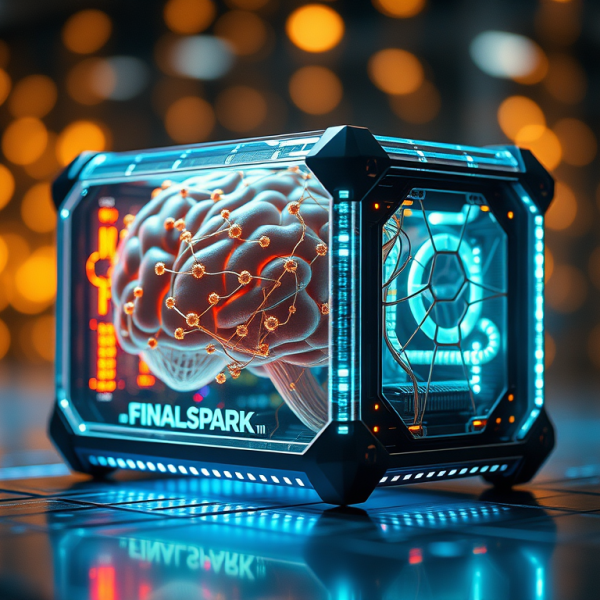
Swish startup named FinalSpark has emerged as a pioneer in the field of biological computing, pushing the boundaries of technological innovation. The organization was founded in 2014 and is dedicated to develop bioprocessors, a new generation of computing devices that leverage the power of living neurons.
This visionary idea was proposed by 2 independent scientist, first started their collaboration in 2014, and since has grown to a total of 9 members. The Core Team consist of the Co-founders Dr. Fred Jordan and Dr. Martin Kutter and 4 leading scientists
- Dr. Ewelina Kurtys: Scientist
- Jean-Marc Comby: Scientist
- Dr. Flora: Scientist
- Gregorio Rebechi: Scientist
Bioprocessors are devices that are using living cells– often neurons- to process information. This “biological computer” instead of silicon chips, is leveraging the power of living cells to perform calculations and solve problems. These chips have numerous advantages above traditional processors, including ability for learning and adaptation, parallel processing, and are incredibly energy efficient. Here is a simplified explanation on how researchers grow, interact with these organoids.
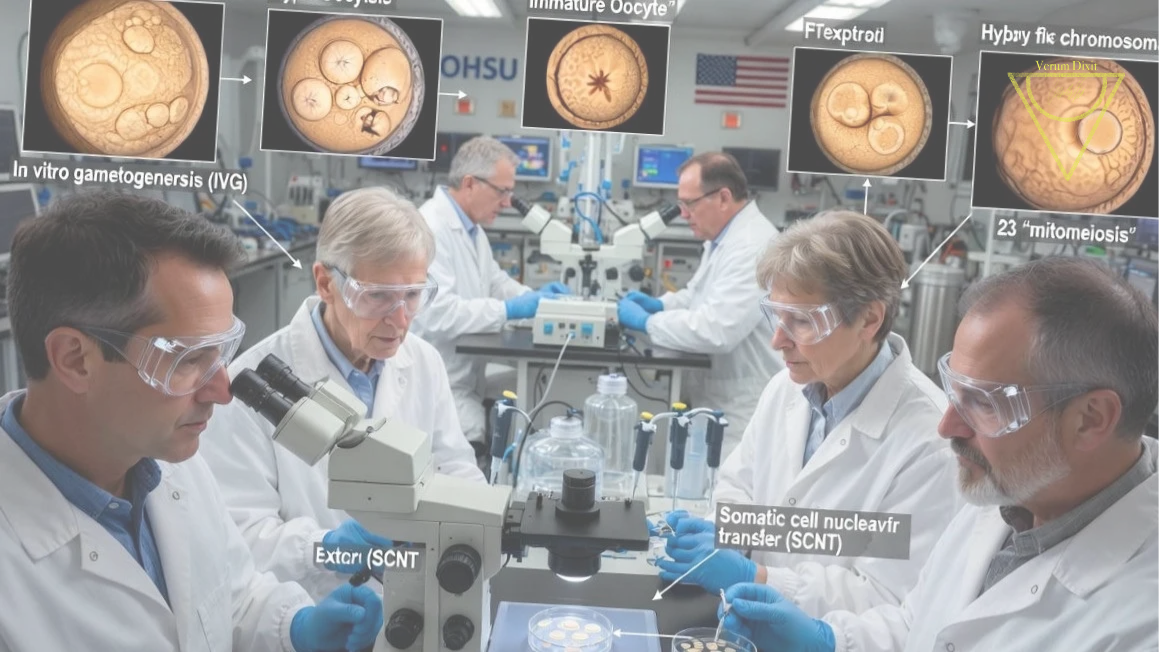
Creating the Organoid
Stem Cell Differentiation: Induced Pluripotent Stem Cells (iPSCs) are differentiated into neural progenitor cells.
3D Culture: These cells are cultured in a 3D environment to form organoids, mimicking brain-like structures.

Image in courtesy of FinalSpark –https://finalspark.com/
Training or Coding Organoids
Directly “coding” organoids is not quite the right analogy. While we can’t directly write code for organoids, we can manipulate their environment and analyze their responses to external stimuli . Multi Electrode Arrays (MEAs) are crucial tool in neuroscience research, and with the aid of these machines we can influence the organoids development and behavior by carefully controlling their environment. The organoids are placed on the top of these essentially small chips that are equipped with multiple electrodes to record the electrical activity. Controlled nutrient supply is also necessary to keep the organoids alive
Recording Neural Activity
Electrophysiological Recordings: The MEA captures the electrical activity of neurons in the organoid, providing crucial insights into the dynamic interactions and functional properties of these cells. This technology allows for the monitoring of spikes and synaptic events over time, facilitating a deeper understanding of neuronal behavior and connectivity patterns. Data Acquisition and Analysis: Specialized software is used to capture and analyze the neural signals, employing advanced algorithms that filter noise and extract relevant features. This process not only enhances the quality of the data obtained but also enables researchers to identify specific patterns associated with various physiological or pathological states, thus paving the way for novel therapeutic strategies tailored to modulate neuronal activity.
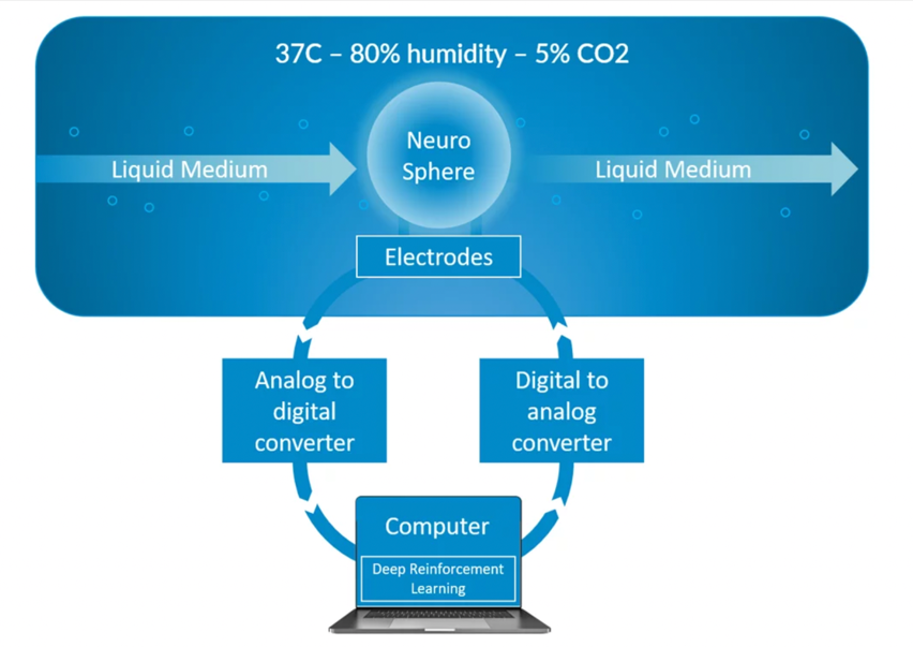
Image in courtesy of FinalSpark –https://finalspark.com/
Stimulating the Organoid
Electrical Stimulation: Researchers can apply electrical stimuli to specific electrodes to mimic sensory input or modulate neuronal activity, fostering an environment that simulates natural physiological conditions. This technique allows for the observation of how neural circuits may respond to various stimuli, enhancing our understanding of brain function and development, while also providing insights into potential neurological disorders and their treatment.
Drugs or other substances can be added to the culture medium to study their effects on the organoid’s development and function. By adjusting concentrations and timelines of administration, researchers can investigate the impact of pharmacological agents on cellular behavior, differentiation pathways, and overall organoid maturation, paving the way for innovative therapeutic strategies and personalized medicine approaches.

While this concept is fascinating, it is important to consider how challenging and complex task to develop and control a bioprocessor. Organoids can exhibit significant variability, making it extremely difficult to reproduce experiments, and the current organoids are still relatively small and simple, compared to the human brain. This technology is still in early stages, however Final Sparks’s recent startup will definitely shake things up in the field of Biocomputing.
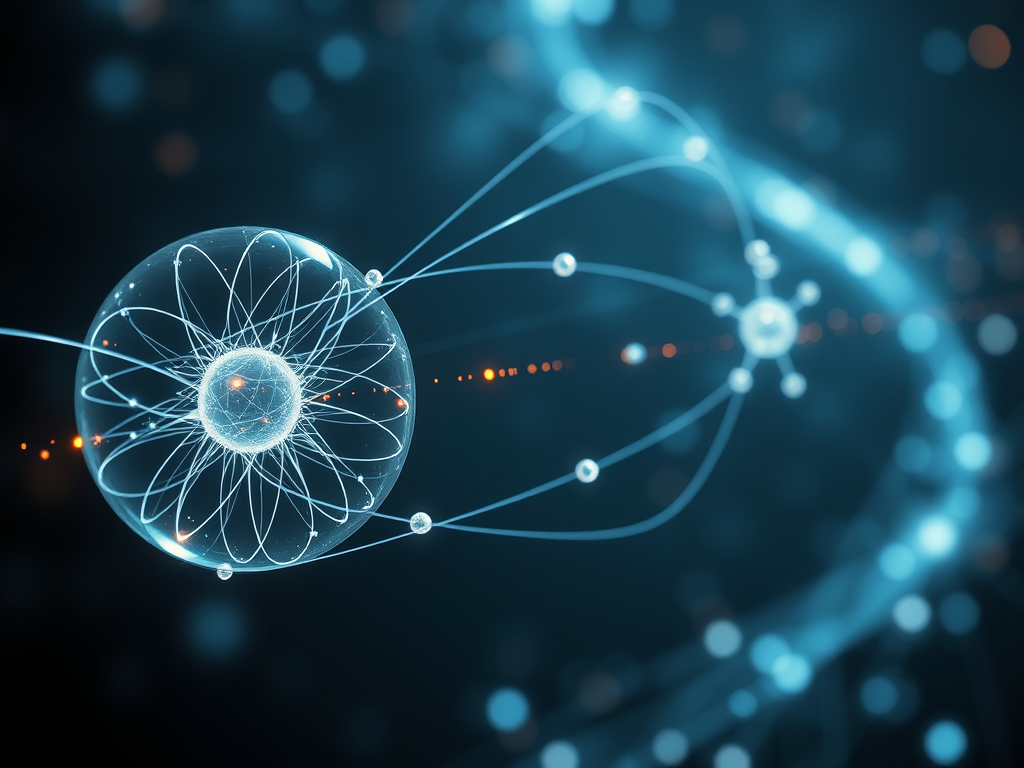
The groundbreaking idea emerged from a visionary group of independent scientists in Switzerland. FInal Spark’s vision is to create a THINKING MACHINE by developing a new type of Bio processor. This new type of processor utilizes human brain organoids to process information. The lab grown miniature brains are placed in a multi-electrode arrays(MEAs) and trained to recognise patterns and make decision
The scientists are using a combination of electrical stimulation and recording to communicate with the brain organoids. By applying specific patterns of electrical pulses to the electrodes, the user can stimulate the neurons within the organoid. This process is used to “train” the organoid to perform specific tasks.
By carefully controlling the electrical stimulation and analyzing the resulting neural activity, researchers can effectively communicate with and understand the information being processed by the brain organoids.
A step away from silicon chips
Bioprocessors generally different from silicon based transistors, but FinalSpark’s technology is a radical departure from traditional computing paradigms.
Bio-processors, unlike traditional ones relies on biological bases, meaning it utilizes living neurons, and in our example living organoids. These biological cells are the building blocks of the human brain, capable of processing information and generating complex responses. Neurons communicate through electrical and chemical signals, which is a fundamentally different approach compared to the binary logic of traditional computers, this approach offers a more nuances and powerful way to compute.
A key characteristic, that sets these processors apart from its traditional pair, is that Neurons are capable of learning and adapting through experience. Neural networks can exhibit emergent behavior allowing them to develop complex behaviors that re not explicitly programmed. For instance a neural network might be able to recognize patterns, or the missing pattern that are not explicitly defined. Traditional AI often requires periodic retraining, while traditional network can continuously learn and adapt to new information, making them robust and versatile.
Another incredible feature of biological computers is the potential of self-repair capabilities and parallel processing. Silicon based computing already introduced parallel processing, however neural networks could enhance this function and achieve massive parallelism. And last but not least the biological neurons are significantly more energy efficient than traditional chips.
Cloud based Access
The Neuroplatform: A Leap Forward
COVID-19 hasn’t avoided the lab neither, but scientists quickly turned their disadvantages to a revolutionary feature, which has significantly impacted the lab’s future. Previously talked about in a podcast, Co-founder Fred Jordan revealed that during COVID they were unable to visit the lab, therefore they had to work out a solution to continue with the research, otherwise all that effort and living cells could be scraped into the bin.
FInalSpark developed a groundbreaking Cloud-based Neuroplatform, giving opportunity for researchers worldwide to access these brain organoids remotely, and conduct experiments on the living brain organoids. These revolutionary platform was first used only by the research group, however in May 2024 the firm decided to make it accessible for the public. By providing access to this technology, FinalSpark aims to accelerate scientific progress and foster collaboration among researchers.
Applicants will still have to go through an authorization, and would need to provide the organization with a project proposal to allow the team to carefully review and decide weather or not to facilitate the processor for the matter, and weather the processor is capable with the given task. After a short waiting list and a small fee($1000/m) you are already connected to your private organoid.
Currently there are 9 users of the platform all of which is a listed top performing University.

Image in courtesy of FinalSpark –https://finalspark.com/
Cloud based Bio-processors have could fundamentally change currently available language models. By offering unprecedented scalability, accessibility, and collaborative opportunities. This cloud platform allows researchers and developers to access and utilize bioprocessors, regardless of their physical location. Cloud providers can also offer scale-able infrastructures to support the growing demand of biocomputing, enabling the deployment of large-scale bioprocessor networks.
These networks can facilitate collaboration among researchers worldwide, allowing them to share data, models, and computational resources, and by pooling resources , the users can accelerate the development of new biocomputing technologies and applications.
The platform could also lower the barriers for entry researchers, creating a wide range of individuals and organizations that could participate in Ai research, and also foster open innovation. By leveraging the power of cloud computing, bioprocessors can unlock new frontiers in AI, leading to more powerful, efficient, and ethical AI systems.
The Road Ahead
FinalSpark’s pioneering work in biocomputing represents a significant milestone in the history of technology. As the company continues to advance it’s research and development efforts, we can expect to see even more groundbreaking innovations in the years to come.
FinalSpark’s vision extends beyond the Neuroplatform. The company’s ultimate goal is to develop fully functional biocomputers that can outperform traditional silicon-based computers in terms of energy efficiency, processing power, and problem-solving capabilities.
While still in its early stages, biocomputing has the potential to revolutionize various fields, including medicine, materials science, and artificial intelligence. As scientists continue to unravel the complexities of biological systems, we may see a future where biological computers surpass traditional silicon-based computers in terms of speed, efficiency, and problem-solving capabilities.Biocomputing is a field that uses biological molecules and systems to perform computations. Unlike traditional computers that use silicon-based transistors, biocomputers use biological components like DNA, RNA, or proteins to process information.
By harnessing the power of biology, we may be able to develop more intelligent, efficient, and sustainable technologies.FinalSpark’s biocomputer could revolutionize various industries, including healthcare, finance, and artificial intelligence. Some potential applications include:
- Drug Discovery: By simulating biological processes, biocomputers could accelerate the discovery of new drugs and treatments.
- Artificial Intelligence: Biocomputers could enable the development of more advanced AI systems capable of understanding and responding to complex information.
- Climate Modeling: By simulating complex climate systems, biocomputers could help us better understand and address climate change.
- Materials Science: Biocomputers could be used to design new materials with specific properties, such as superconductivity or high strength.
- Energy Efficiency: Biocomputers could offer significantly higher energy efficiency compared to traditional computers, reducing the environmental impact of computing.
However, it is important to approach this emerging field with caution and foresight. By carefully considering the ethical implications and potential risks, we can harness the power of biocomputing to benefit humanity while minimizing unintended consequences.
While the potential benefits of biocomputing are immense, it also raises important questions. As we delve deeper into the realm of biological computing, it is crucial to consider the ethical implications of creating and manipulating living neural networks. Bioprocessors advance, further issues are expected to appear. Organoids are currently significantly small and simple compared to the human brain, however as the technology advances, and organoids became greater in size we must take the ethical treatment of brain organoids into account and the the potential risk for misuse of biocomputing technology, and the long-term consequences of integrating biological and technological systems must be carefully addressed.
This article was made in courtesy of Final Spark, if you wish to learn more about this fascinating new technology subscribe to our newsletter, or head straight to –https://finalspark.com/

Subscribe to continue reading
Subscribe to get access to the rest of this post and other subscriber-only content.