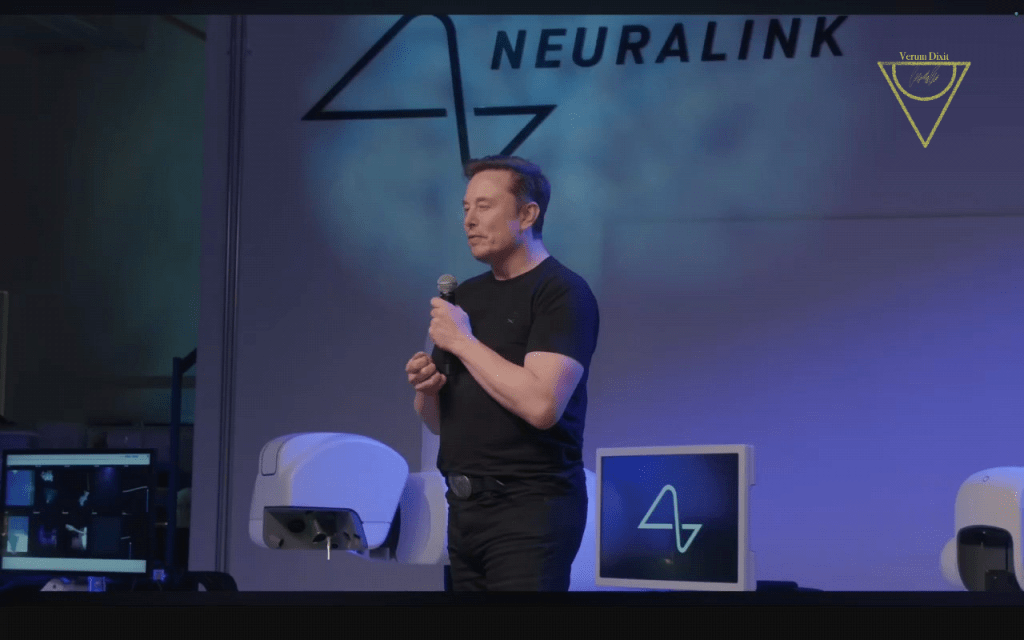

Neuralink, founded in 2016 by Elon Musk is a private neurotechnology company that has been developing implantable brain-machine interface (BMIs) to enhance human capabilities for the past decade. These brain-computer interfaces aim to assist those with neurological conditions like paralysis and amyotrophic lateral sclerosis (ASL) by creating a direct link between the brain and the connected computer. This revolutionizing technology have the potential to alter the way we interact with technology and could restore the life of those who were born disabled, or have suffered an accident leaving them permanently paralyzed.
The first patient received the implant just over a year ago, in January 2024. Noland Arbaugh was left paralysed after a spinal cord injury, and is unable to move from the shoulders down. Since it’s initial implantation after a short period to adapt to this new technology, Noland demonstrated his ability to control a computer cursor with his mind, type, use design softwares and play video games among other standard computing tasks. After showcasing the incredible capabilities and potential of the device, the second volunteer, who suffered a spinal cord injury, came forward and received their chip in August 2024.Since then, they have successfully adapted to the device and used it for a wide range of computing tasks

This work by The New York Times is licensed under CC BY-SA 4.0
Yuma, Arizona, May 21, 2024, Arbaugh participating in a clinical trial ,testing the Neuralink device’s abilities using a chess game, which revealed an issue with the cursor’s synchronization. After detecting the issue it was quickly resolved — reported by The New York Times.
The device has undergone multiple iterations following its debut, achieving higher data transmission capacity by increasing the number of electrodes used to communicate with the patient’s brain to 1,024, with clinical reports indicating that 400 electrodes were already functioning in the second patient.Engineers are actively developing refinements to improve signal detection and transmission, critical for enhancing the technology’s scalability
The third Neuralink implantation, part of the ongoing PRIME study, is designed to help individuals with severe motor disabilities, such as ALS or quadriplegia, control external devices and enhance communication through brain-computer interfaces. Unlike the first two patient, Bradford Smith was diagnosed with amytrophic lateral sclerosis (ASL) at age of 39. This is a progressive neuro-degenerative disorder that affects motor neurons, leading to muscle weakness, paralysis. In Brad’s case, the disease has advanced to a point where he is non-verbal, relies on a ventilator for breathing, and can only move his eyes and parts of his zygomaticus major– the muscle extending from the cheekbone to the corner of the mouth and is responsible for pulling the mouth upward- Brad received his implant in January 2025 reported by CEO Musk during an event in Las Vegas, that was also streamed on X.
We’ve got three humans with Neuralink’s and all are working well” announced by Elon Musk
The implant, reported by the study, enabled Brad to control a computer cursor and type with his brain, and with the aid of Musk’s Grok AI, the text was converted into speech, using a cloned version of his own previously recorded voice, effectively giving back his ability to speak.
The PRIME Study
In January 2025, Elon also explained that as part of the PRIME study, they are looking to implant the device in 20-30 additional patients within a year’s time. This massive expansion of Neuralink’s clinical trial shows significant advancements in the very short period that these devices have been in use. The proposed expansion is also supported by the organization’s updates to its U.S. trial listing back in November 2024, including space for up to five extra volunteers and opening its trial in Canada with a total of 6 available spaces for participants.

Subscribe to continue reading
Subscribe to get access to the rest of this post and other subscriber-only content.