
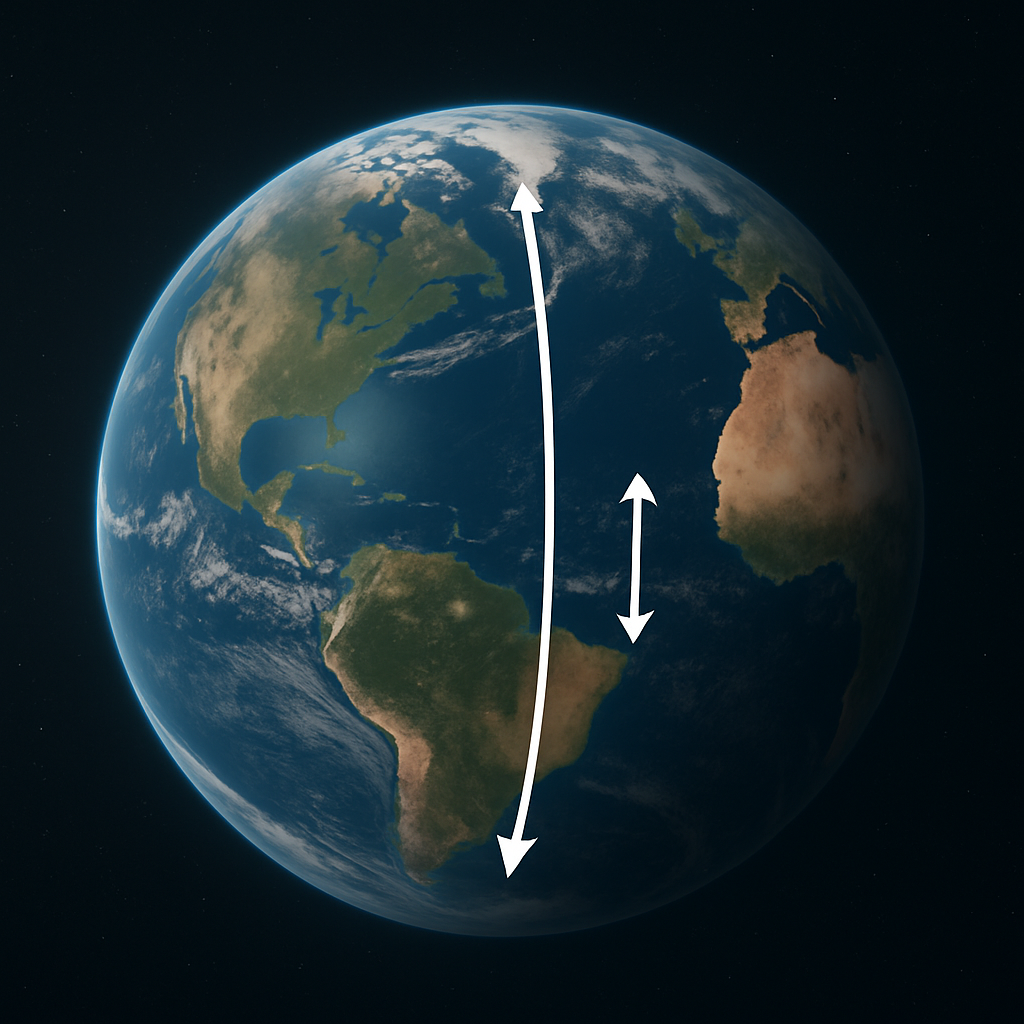
NASA has long studied the effects of large-scale human projects on Earth’s rotation due to mass redistribution, and for years, these efforts were considered scientifically intriguing, but ultimately inconsequential. No evidence initially pointed to any measurable difference. However, their predictions were shortly proven correct when Benjamin Fong Chao, leading geophysicist at NASA’s Goddard Space Flight Center, initiated a study in 2012 confirming the findings, which were officially reaffirmed by NASA in 2025.
Benjamin Fong Chao proposed that the Three Gorges Dam, completed in 2012, could pose a subtle threat to our planet. He explained that due to the dam’s immense mass—holding around 40 cubic kilometers os of water—it could slightly alter Earth’s rotation and according to the study, the dam’s reservoir lengthened the day by 0.06 microseconds.
The research suggests that when the dams are full, the high mass they hold influences Earth’s rotation by redistributing that mass. This effect is rooted in the principle of moment of inertia, where mass distribution alters the rotational dynamics of the planet. Furthermore, Dr. Chao’s work also mentions that the dam shifted Earth’s pole position by about 2 centimeters, ultimately making the planet slightly rounder. The change is minuscule; however, when extrapolated, it adds over three days to the age of the universe, highlighting a very considerable impact, given that the study relates to a singular human-made large-scale project and does not incorporate the countless others, similarly great in size.
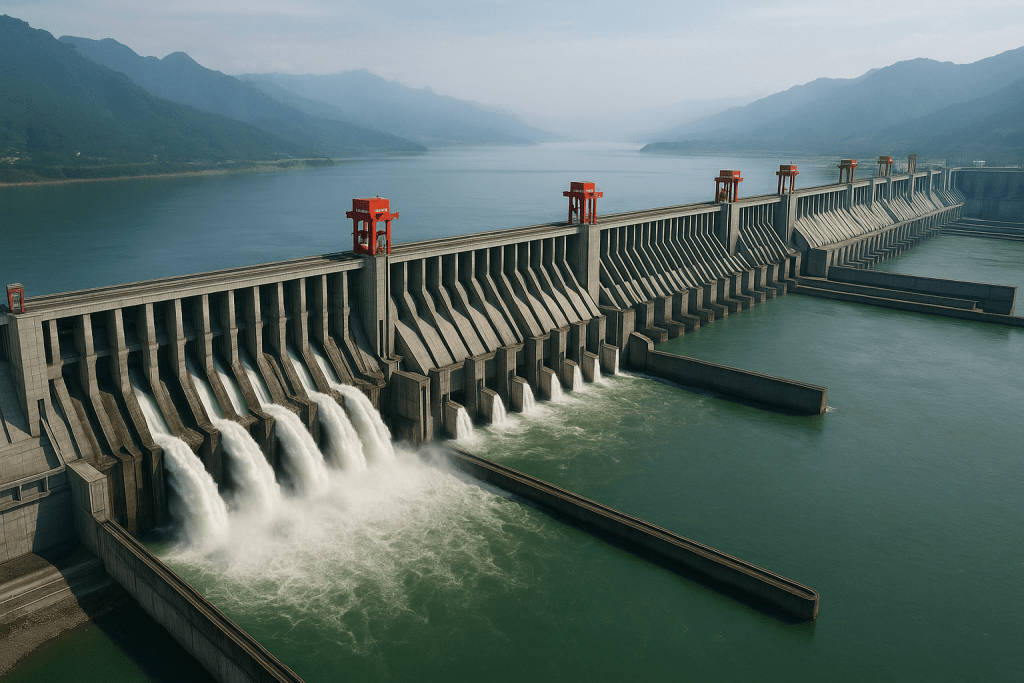
The exact dates of the study’s publication are not available; however, recent announcements made by NASA reiterate these findings and confirm the dam’s role in slowing Earth’s rotation. Although the dam’s effect is small, it is part of a broader pattern in which human activities influence planetary dynamics—and if scaled globally, it could pose a critical threat to our climate. Redistributing mass toward the equator ultimately slows Earth’s rotation and causes effects similar to climate change, such as contributing to the melting of polar ice caps and rising sea levels.
This finding is not controversial, as it is scientifically acknowledged. Sources like IFL Science noted that the effect is significant for a human-made structure. The change of 0.06 microseconds is unnoticeable to humans, as one microsecond equals 0.000001 seconds, and the dam’s effect is even smaller. Yet, it underscores the interconnectedness of human activities and planetary system and serves as a wake-up call for environmentally responsible innovation, highlighting the ripple effects of large-scale engineering.
To stay up to date on the latest developments in Earth system science and geophysical impacts of megastructures, subscribe to our newsletter — or head straight to NASA’s official website by clicking here








































































Leave a Reply