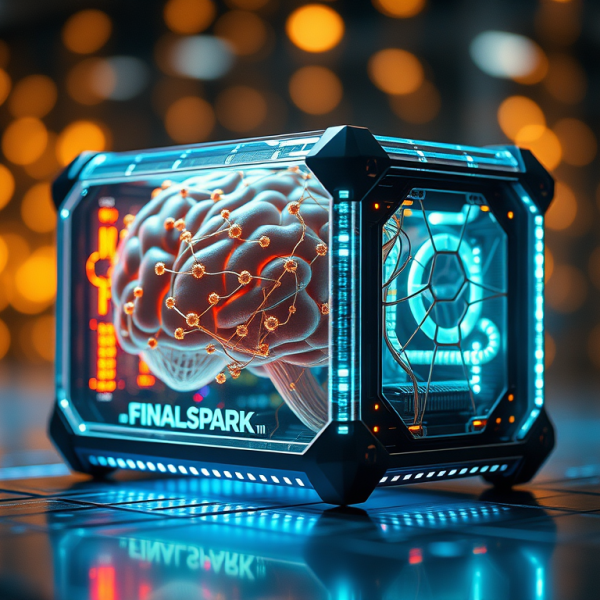

Neuralink, established in 2016 by Elon Musk, is a private neurotechnology firm focused on creating implantable brain-machine interfaces (BMIs) designed to enhance human abilities. Musk’s long-term vision in establishing Neuralink was to foster a unique “human-AI symbiosis,” enabling the human mind to connect seamlessly with an AI-powered microchip. This innovative technology aims to restore cognitive disconnections in individuals who were born with disabilities or became disabled later in life, eventually even enhance the cognitive abilities of healthy individuals. We reported in our article the beginning of Neuralink’s third round of clinical testing, which involves selecting a volunteer with speech impairment. After a series of surgeries, they successfully implanted the microchip and utilized the patient’s audio recordings to assist AI in restoring his ability to communicate once again.
While these accomplishments alone could count as a miracle, it is important to mention that it is still in the testing phase, and only three people have received these chips, yet achieved success in multiple neurological disconnections restoration. Even though this means that commercialization is still years away, it also indicates that the finished Neuralink will not only include the features of the current model, but throughout the years, it could become a literal “miracle chip.” And here comes the next update as Musk has announced plans to expand Neuralink’s brain-computer interface technology starting in 2026 beyond its initial focus on motor control to include sensory restoration, specifically vision!
The billionaire has mentioned his plans to develop a sort of “vision chip” back in 2023, first in a post on X replying to a thread about someone losing their eyesight, claiming it to be ready within a few years. Advancing from the momentum in mid-2024, Musk announced Blindsight as Neuralink’s next product after telepathy (motor control), though a specific date for its actual testing and commercialization was not clarified then, nor was any other context provided. He later elaborated that it is already working in monkeys in a sort of “low resolution” version, akin to “Nintendo graphics,” as he states here, and will gradually transition to human tests, reiterating also that no monkeys have died or been injured in any way during any part of Neuralink’s clinical trials.
We have not received any further details until the end of 2024, when during his appearance on the Lex Fridman Podcast Musk discussed Blindsight as a second product that will initially provide low-resolution vision restoration due to the limited number of neurons they are able to connect to the Neuralink itself. However, over time, they plan to further refine the device to connect thousands of neurons, ultimately achieving enhanced vision capabilities such as ultraviolet and radar wavelengths, which are typically only seen in video games.
After this, for almost a year news about the supposed product have stopped emerging, that is until June 2025, when Neuralink uploaded a video update where Musk briefly presented Blindsight as their next product along with a detailed overview of its potential applications and capabilities. This announcement reignited interest and speculation in the tech community regarding the future of neural interface technology.The implementation would involve surgically implanting Neuralink’s small coin-sized brain-computer interface (BCI) chip into the skull, similar to procedures performed on patients 2 and 3. However, unlike those cases where the chip was placed in the brain’s motor areas, it will be inserted into the visual cortex, accompanied by 64 ultra-flexible threads with a total of 1,024 electrodes.
This method bypasses damaged eyes or optic nerves by directly stimulating neurons in the visual cortex, generating a form of artificial image using data from an external camera—likely glasses or a headset that captures real-world visuals and feeds it wirelessly to Neuralink’s implanted device. The graphics, as he stated, will start in very low resolution due to the limited number of neurons that can be effectively connected and stimulated in the visual cortex. Each electrode on the implant can target specific neurons to create phosphenes (spots of light that form the basis of the perceived image). While in the beginning Neuralink will be able to simply increase the number of electrodes connected to achieve finer details, sharper edges, and overall better “resolution,” to reach human-level or the promised “superhuman vision” (e.g., seeing in infrared), the BCI will require much more advanced software algorithms that can interpret and stimulate the neurons more precisely.
To follow the path of this revolutionary neurotechnology and brain-computer interface innovations, subscribe to our newsletter, or explore the ongoing investigations through organizations such as the IEEE Brain initiative, or by heading straight to Neuralink’s official page. Additionally, our subscribers will find an hour-long conference published by Neuralink in the summer, detailing the current stages of their BCI and the upcoming Blindsight.

Subscribe to continue reading
Subscribe to get access to the rest of this post and other subscriber-only content.