
Hypersonic technology, defined as travel at speeds exceeding Mach 5, has been a focal point of global military and aerospace ambitions since the Cold War, due to its potential to revolutionize warfare and space travel. Although the concept originated in the United States, early efforts failed to produce fully functional systems. However, recent developments by the Chinese Academy of Sciences’ Institute of Mechanics have marked a significant breakthrough. Their creation of the OED and other advanced hypersonic technologies—capable of making instantaneous 90-degree turns at nearly three times the speed of sound—not only challenges previous scientific boundaries but stands as a breakthrough firmly defining the laws of physics anew, positioning China as a formidable leader in this domain.
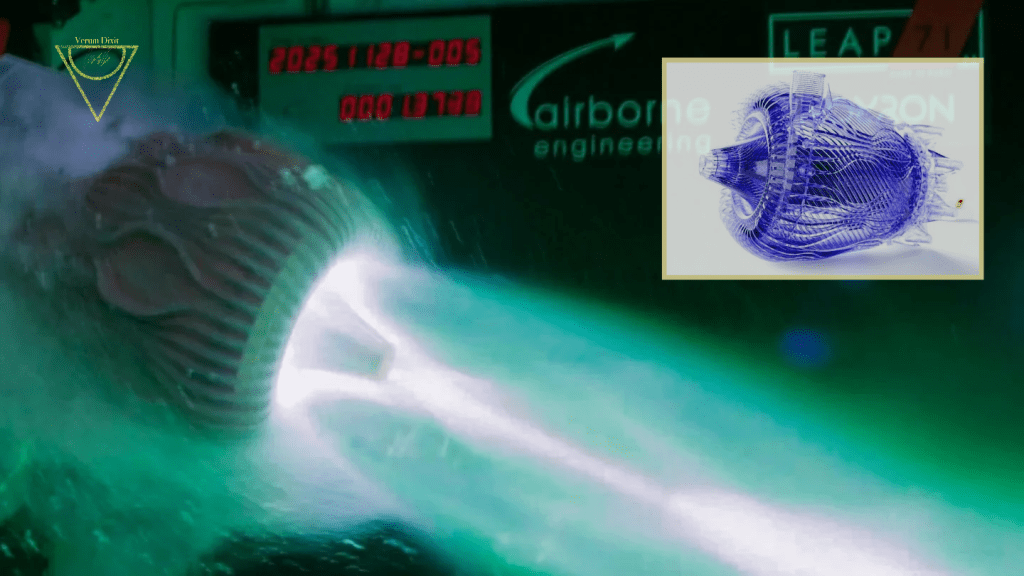
A group of scientists, led by chief researcher Han Xin at the Chinese Academy of Sciences‘ Institute of Mechanics, has successfully overcome long-standing barriers in aerospace and defense engineering—opening new horizons for both space exploration and military technology. Notably, the development of this breakthrough is closely linked to the Oblique Detonation Engine (ODE), a next-generation propulsion system also developed by the CAS. The ODE system was successfully tested previously in February 2025, where the engine managed to reach a speed 16 times the speed of sound, totaling approximately 20,000 km/h.- as reported in China’s Journal of Experiments in Fluid Mechanics However, this engine was not specifically designed for maneuverability; rather, its primary purpose was to test the abilities of shockwave-induced combustion and measure its performance at extreme velocities. Reports of an advanced hypersonic missile with the ability to turn 90 degrees surfaced in late July 2025, as reported by SAFIR TV, shaking up ongoing developments in the advancing field of hypersonic weapon and space technology
The ODE uses standard aviation kerosene (RP-3) to achieve combustion via shock waves, operating between Mach 6 and Mach 16 with a combustion rate up to 1,000 times faster than that of traditional jet engines, inducing “detonation diamonds” with a 5mm bump on the combustor wall, as reported in tests. The later-revealed hypersonic missile, capable of speeds from Mach 2.6 to Mach 16, also features an extraordinary capability: its advanced aerodynamic design and innovative propulsion enable it to execute 90-degree turns at supersonic speeds, even at Mach 2.6. This represent significant leaps in hypersonic technology, potentially shifting the balance of power in military applications.
Tests conducted in the JF-12 shock tunnel simulated high-Mach flight conditions at altitudes above 40 km. The engine relies on detonation-driven impulses, and the results positively confirmed its feasibility for practical use. The missile can be launched from ground-based platforms and, remarkably, even from space, greatly enhancing the flexibility and deployment options of this new super-weapon.
The rapid development of these technologies is primarily driven by China’s ambition to enhance high-speed weaponry and defense systems. Once deployed, they could redefine the limits of air and space travel, while the missile’s maneuverability poses a serious threat to the global arms balance, making it difficult for existing defense systems to track and intercept. Its integration into operational systems by 2030 could enable hypersonic cruise missiles with ranges of up to 4,000 km, capable of delivering payloads in as little as 12 minutes. China’s hypersonic missile technology represents a significant advancement. While details on commercialization and specific entities remain limited, the potential strategic impact is clear, positioning China as a leader in the hypersonic arms race.
If you wish to stay up to date in the hypersonic aerospace and defense industry, subscribe to our newsletter, or head directly to the official page of the Chinese Academy of Sciences’ Institute of Mechanics.

Subscribe to continue reading
Subscribe to get access to the rest of this post and other subscriber-only content.